Who Needs a Cargo E-Bike? Customer Types and How the Category Actually Splits
 Share on X
 LinkedIn
 Facebook
 Reddit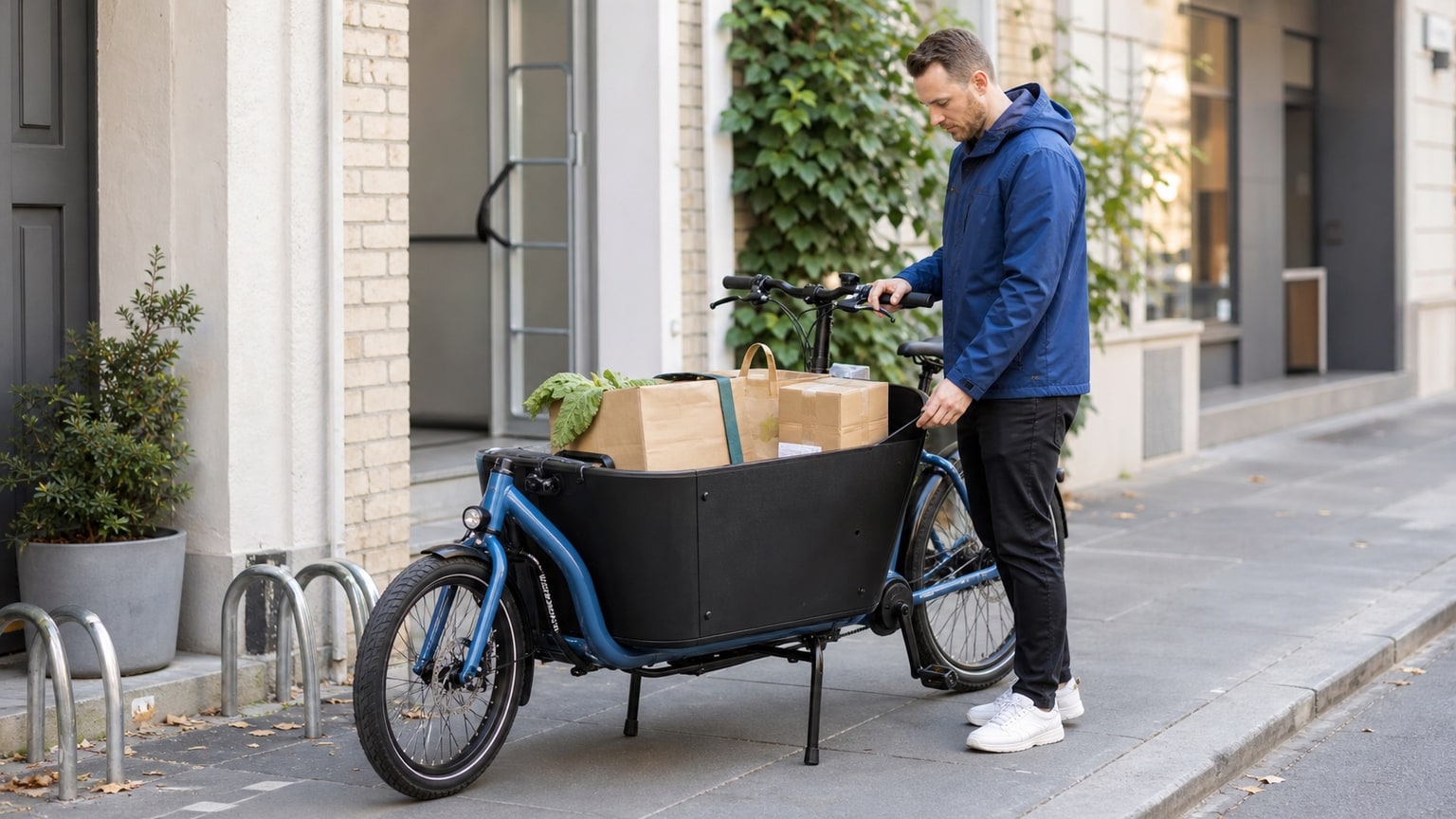
Most cargo e-bike RFQs collapse two questions into one: “We need a cargo bike — send a quote.” That sentence hides the actual decision. A 27.5-inch courier bike with an insulated food box, a 20-inch fat-tire steel-frame hauler, a bakfiets with a 250-litre front crate, and a three-wheel cargo trike are all sold as “cargo e-bikes.” They serve different customers, survive different duty cycles, and fail in different ways when the match is wrong.
This article is written for the people who buy, specify, or import those bikes: fleet operators, 3PLs, food-delivery platforms, postal and municipal buyers, facility managers, family retailers, and OEM/ODM importers. It answers two questions in order. First, which customers actually need a cargo e-bike, and why a van, moped, or ordinary e-bike is the worse tool. Second, how the product category splits — by architecture, payload, regulation class, and duty — so a procurement team can stop comparing apples to bakfiets.
If you already know the customer and only need spec matching, read our delivery e-bike buyer’s guide. If you need the cost case against vans and mopeds, use the urban TCO model. This piece sits upstream of both: who the buyer is, and which class of bike they should even be looking at.
Executive Takeaway
A cargo e-bike is justified when the work is dense, stop-heavy, payload-bounded, and constrained by access or emissions rules. The customer types that fit that profile are last-mile parcel and food operators, postal services, grocery and pharmacy loops, municipalities under LEZ pressure, campus and hospital logistics, trades on short urban hops, and — in Europe especially — families replacing a second car. The product then splits four ways: architecture (courier rack, longtail, front-loader, trike), payload band, regulation class (EPAC vs speed-pedelec vs US Class 1/2/3), and duty (fleet vs family). Match those four before you open a spec sheet.
1. When a Cargo E-Bike Is the Right Tool
Not every urban trip wants a cargo bike. The vehicle wins when four conditions stack:
- Stop density is high. The cost of parking, idling, and walking from a van dominates the cost of moving. Forty-plus stops per day in a dense core is the classic threshold; postal routes go much higher.
- Payload fits a two- or three-wheel platform. Typical working bands: 15–40 kg per stop cluster for food and documents; 40–100 kg for grocery and mixed parcel; 100–250 kg for wholesale, beverage, and facility runs. Above that, a van still wins.
- Access is constrained. Bike lanes, pedestrian zones, campus paths, hospital corridors, historic cores, and zero-emission streets that vans cannot enter — or enter only at a fee.
- The alternative is expensive per stop. Congestion charges, LEZ fines, driver wages against courier wages, parking search, and fuel. The TCO comparison is the quantitative version of this point.
If the route is long, sparse, and heavy, a cargo bike is a political gesture, not an operating model. If the route is short, dense, and payload-bounded, it is usually the cheaper vehicle — which is why the customer list below keeps growing.
2. Who Actually Buys: The Customer Map
The market talks about “cargo bikes” as if one buyer exists. In practice, eight customer types show up in RFQs, and they do not want the same machine. The table is the map; the sections that follow explain the buying trigger for each.
| Customer | Typical payload / day | Architecture they should spec | Why a cargo e-bike, not a van or moped |
|---|---|---|---|
| Last-mile 3PL / parcel courier | 40–100 kg mixed parcels, 50–90 stops | Courier rack or longtail; dual-battery on long loops | Near-zero cost of stopping; bike-lane access; LEZ-legal |
| Food platforms, restaurants, dark kitchens | 8–25 kg hot/cold, 8–15 drops per shift | Light courier with insulated box; compact 20–27.5" frame | Faster than a van in the core; cheaper than a moped to insure and park |
| Grocery, pharmacy, quick-commerce | 20–40 kg, 8–12 drops, temperature-sensitive | Longtail or front-loader with insulated crate; swappable battery | Dark-store aisles and pedestrian streets; 15-minute SLA |
| Postal / national mail | Letters + small parcels, 150–300 stops | Front-loader or step-through courier; heavy-duty kickstand | Mount/dismount cost dominates; vans idle between letterboxes |
| Municipal / city logistics | Mixed: waste, tools, civic post, 30–80 kg | Heavy two-wheel or trike; EN 15194 where possible | LEZ and procurement mandates; public-realm access |
| Campus, hospital, facility, trades | Tools, parts, documents, 15–80 kg internal | Compact courier or longtail; quiet, elevator-friendly | Indoor corridors, no emissions, no golf-cart licensing |
| Family / household (B2C) | Kids + groceries, 40–100 kg combined | Family longtail or bakfiets; passenger-rated rear | Second-car replacement in dense European cities |
| OEM importer / brand / distributor | Container volumes, mixed models | Whatever their end-customer mix requires | They are not the rider — they are the channel. Spec for the end user, certify for the destination. |
Last-mile 3PLs and parcel couriers
This is the largest commercial buyer by fleet size. A 3PL or regional courier running a city core does not need a cargo bike because it is “green.” They need it because a 3.5-ton van carrying 80 kg of parcels spends most of the shift looking for a kerb, walking the last 80 metres, and paying to exist in a low-emission zone. Once stop density crosses roughly 40 stops per km², the cargo bike’s cost per stop undercuts the van — the finding behind most European postal and parcel pilots, and the operating logic of the micro-hub + cargo e-bike model.
What they buy: a courier or longtail platform with a lockable box or modular panniers, hydraulic discs, a battery that covers a full shift (or a swap routine that does), and GPS so a 50-unit fleet does not evaporate. Payload in the 80–120 kg band is the workhorse. Over-speccing to a 250 kg trike on a document-and-small-parcel route wastes money and parking space; under-speccing a 350W courier on a wholesale beverage loop burns motors.
Food platforms, restaurants, and dark kitchens
Food delivery is time-critical and payload-light. The box is the product: insulated, standardized, and brandable. The bike underneath should be light enough for a contractor to take home in a lift, EPAC-legal so it can use bike lanes without a moped licence, and cheap enough that a 30-unit restaurant group can fund it from one quarter’s scooter-hire bill.
What they buy: a compact courier e-bike — 20-inch to 27.5-inch wheels, 250W in the EU, an insulated rear box, and a frame that survives kerb strikes. Dual-battery or a depot swap matters more than a giant single pack, because lunch and dinner peaks are short and intense. A bakfiets is usually the wrong answer here: too wide for restaurant alleys, too slow to mount, too expensive for a gig rider.
Grocery, pharmacy, and quick-commerce
The 15-minute grocery model created a customer that did not exist a decade ago: a dark store that needs to push 20–40 kg of mixed SKUs through pedestrian streets, on a clock. Temperature control and crate volume matter as much as motor power. Riders work out of a micro-fulfilment site, so the bike has to roll down an aisle, stand while being packed, and leave without a reverse-gear drama.
What they buy: a longtail or front-loader with an insulated crate, a kickstand that holds a loaded bike upright, and a swappable battery — a four-hour charge in the middle of a peak is an SLA miss. Three-wheel trikes appear when the payload regularly exceeds 120 kg or the rider pool includes people who will not balance a two-wheel bike at a standstill.
Postal and national mail
Postal work is the original cargo-bike duty cycle: 150–300 stops, mixed letters and small parcels, repeated mount/dismount, five-plus years of weather. Deutsche Post, PostNL, Royal Mail and their peers adopted early because the van’s parking-and-walk tax is brutal on a letter route. The vehicle is a rolling sorting tray, not a speed machine.
What they buy: a front-loader or a step-through courier with an open-top crate, automatic or heavy-duty kickstand, and a frame that a workshop can weld. Comfort and mounting height beat peak wattage. A fat-tire 500W hauler is usually wasted on this customer; a bakfiets with internal dividers is not.
Municipalities and city logistics
Cities buy cargo e-bikes for two reasons that look similar and are not. The first is operations: parks, waste, civic post, market management, tool transport. The second is policy: a visible, procurable answer to an LEZ, a climate plan, or a “replace diesel vans in the historic core” mandate. The second buyer will pay for certification theatre; the first buyer will punish you for a bike that cannot take a kerb with 80 kg of tools.
What they buy: EN 15194 / CE-compliant heavy two-wheel or trike platforms, often with municipal livery, GPS, and a spare-parts commitment measured in years, not seasons. Tender language will specify payload, speed cap, and sometimes a local-assembly or CKD clause. If you are quoting a city, read the tender as a regulation document first and a vehicle document second.
Campus, hospital, facility, and trades
This customer is under-counted because the bikes never leave the property. Hospitals move samples and supplies through corridors that vans cannot enter. Airports and factories move tools between shops. Tradespeople in dense cities — plumbers, electricians, HVAC — replace a van they cannot park. The common need is quiet, emission-free, elevator-legal, and narrow.
What they buy: a compact courier or a modest longtail, often with a lockable box, never with a 25 km/h-plus throttle if the site is indoor. Battery size can be smaller because daily distance is short; build quality cannot, because the bike is used every hour the facility is open. A family bakfiets is the wrong aesthetic and the wrong loading height for a maintenance crew.
Families replacing a second car
In the Netherlands, Denmark, Germany and a growing slice of France and the UK, the family cargo bike is a household appliance, not a logistics asset. The job is school run plus grocery plus the occasional flat-pack. European cycle-logistics numbers still show commercial applications as the majority of value, but family longtails and bakfiets are the volume story in several mature markets — and they pull a different spec: passenger-rated rear, child seats, lower standover, friendlier geometry, and a motor that feels natural rather than industrial.
What they buy: a family longtail or a two-wheel front-loader, typically 250W EPAC, often with a torque sensor. A delivery courier with a bolted-on child seat is a liability, not a product. TXED’s family-grade aluminum longtail sits in this band; a steel-frame 500W delivery platform does not, even if the payload number looks similar on paper.
The OEM importer, brand, and distributor
A large share of the people who contact a factory are not the end rider. They are a brand that needs a white-label courier line, a distributor filling a national catalogue, or an importer who has a supermarket chain or a 3PL as the real customer. Their constraints are certification, container economics, after-sales parts, and the ability to mix models in one 40HQ — not the feel of the bottom bracket.
What they buy: a configurable platform — 250W for EU EPACs, 350–750W where the destination allows it, SKD packaging, EN 15194 / CE / UL documentation, and an MOQ they can fill by mixing colours and models. The mistake this buyer makes is speccing the bike they personally like, rather than the bike their end-customer’s duty cycle requires. The rest of this article is the brief they should send upstream.
3. How the Category Splits: Four Classification Axes
Once you know the customer, classify the product. Four axes cover almost every SKU on the market. Mixing them — “we want a bakfiets that does 45 km/h with a 250W motor and a child seat for a parcel fleet” — is how RFQs stall.
Axis 1 — Architecture: where the load sits
Architecture is the decision that determines handling, loading height, and which customer the bike can serve. Everything else is a spec on top of this choice.
| Architecture | Load position | Typical cargo volume / payload | Best customer fit | Watch-outs |
|---|---|---|---|---|
| Courier / delivery e-bike | Rear rack + box (sometimes front bag) | 40–80 L / 30–100 kg | Food, documents, light–medium parcel, facility | A commuter frame with a rack is not a cargo bike — check dropout and rack rating |
| Longtail | Extended rear triangle, deck behind the rider | 80–200 L / 60–120 kg; passenger-capable | Grocery, mixed cargo + passenger, family, some parcel | Wheelbase length vs lifts and vans; rear-end lift under throttle |
| Front-loader / bakfiets | Box between the head tube and front wheel (two- or three-wheel) | 200–400 L / 80–150 kg | Postal, grocery, family, market logistics | Width in traffic; steering geometry; higher unit cost |
| Cargo trike (3-wheel) | Front box or rear platform on two wheels | 300–1,000 L / 150–300 kg | Wholesale, beverage, municipal, riders who need a stable standstill | Width, turning circle, tip-over on cambers if badly designed |
| Quad / four-wheel | Chassis platform | 250 kg+ , pallet-adjacent | Niche heavy urban freight | Often closer to an L-category vehicle than a bicycle; licensing follows |
TXED’s production catalogue sits primarily in the first two rows: courier / delivery platforms (20-inch through 27.5-inch, rack-and-box, steel or aluminum) and longtails (cargo-plus-passenger and family). Front-loaders and trikes are a different factory conversation — they are the right answer for some of the customers above, and the wrong default for a food-delivery RFQ that only needed a 27.5-inch courier.
Axis 2 — Payload band
Rated payload is the number that looks clean on a spec sheet and lies in the field. Treat it as a ceiling, not a target. A fleet that runs at 100% of rated load every shift is buying frame fatigue, brake fade, and warranty arguments. Operational maximum should sit at roughly 70–80% of the rated figure, rider included or excluded according to how the OEM wrote the number — always ask which.
- Light (cargo 10–40 kg): documents, meals, pharmacy bags. Courier architecture. 250–350W. This is most food-delivery fleets.
- Medium (cargo 40–100 kg): mixed parcels, grocery crates, campus supplies. Courier with a serious rack, or a longtail. 350–500W. This is most 3PL city loops.
- Heavy (cargo 100–250 kg): wholesale, beverage, construction supplies, municipal tools. Fat-tire two-wheel, longtail, or trike. 500–750W, and in the EU you are often leaving EPAC territory.
A 120 kg-rated fat-tire bike used for 15 kg meal bags is not “future-proofing.” It is a heavier, thirstier, more expensive vehicle that the rider will hate in a lift. Match the band to the 90th-percentile load, not the one-off sofa delivery.
Axis 3 — Regulation class
The same physical bike can be a bicycle, a moped, or unsellable, depending on the destination. Classification is not a sticker; it decides whether the rider needs a licence, whether the bike may use a cycle lane, and whether a city will even let you tender.
| Class | Rule of thumb | Who it is for | Consequence of getting it wrong |
|---|---|---|---|
| EU EPAC (EN 15194) | ≤250W nominal, assist cuts at 25 km/h, pedal-assist (walk-assist ≤6 km/h) | Almost every EU commercial and family buyer who wants bike-lane access | Reclassified as L1e-B: insurance, plate, helmet, no cycle infrastructure |
| EU speed pedelec / L1e-B | Assist to 45 km/h, typically 500W+, type-approved | Suburban loops, hilly heavy cargo, riders who will accept moped rules | Cannot be sold or ridden as a bicycle; tender language often forbids it |
| US Class 1 / 2 / 3 | Class 1 PAS 20 mph; Class 2 throttle 20 mph; Class 3 PAS 28 mph | US fleets; local rules vary by city and path | Path bans, insurance gaps; UL 2849 increasingly expected at the port |
| Throttle-primary / uncertified | No pedal-assist limit, no accredited test report | Almost nobody who plans to import into the US or EU in 2026 | CBP / EU customs holds, insurance refusal, municipal fines |
For a deeper cut on power limits by market, see delivery e-bike motor power limits by country. For the certification dossier itself, UL 2849 and EN 15194 for US/EU importers. The short version for this article: if the customer is a European fleet, start at 250W EPAC and only leave it with a written reason.
Axis 4 — Duty: fleet vs family vs mixed
Two bikes can share a wheel size and a wattage and still be different products. Duty cycle is the difference.
- Fleet duty: 5–7 days a week, 40–90 km a day, multiple riders, abuse, theft pressure, workshop-replaceable parts, GPS, SKD-friendly packaging, a spare-parts float. Steel frames, hydraulic discs, single-speed or internally geared hubs, and batteries that swap in 20 seconds are the language of this duty. TXED’s 20-inch steel-frame heavy-duty cargo and the dual-battery city platforms are built on this assumption.
- Family duty: 1–2 hours a day, one or two riders who own the bike, passenger safety, comfort geometry, torque-sensor assist that feels like a bicycle. Aluminum longtails, child-seat mounts, and a quieter aesthetic. Running a family bike on a Deliveroo shift is how you generate a warranty claim and a bad review.
- Mixed / facility duty: daily use, short distance, multiple staff, indoor as well as outdoor. Closer to fleet on durability, closer to family on speed and noise.
Importers who put one SKU in both a family catalogue and a courier catalogue without changing the spec are asking one of those two customers to subsidise the other. Separate the duty, even if the frame looks similar in a photo.
4. Matching Matrix: Customer → Class → TXED Platform
The table below is a starting brief, not a quote. Payload and range figures are the models’ published bands; real-world range under load is typically 60–70% of the brochure number, as the fleet buyer’s guide explains. Motor options are configurable by destination regulation.
| If the customer is… | Start with this class | TXED platform to evaluate | Headline spec |
|---|---|---|---|
| EU food / meal courier, restaurant group | EPAC courier, insulated box | TXED EU Courier 27.5" · 25 km/h Food Delivery | 250W hub, ≤25 km/h, 36V 10.4Ah, 31–60 km |
| High-frequency urban courier, regulation-sensitive | Compact EPAC courier | TXED Compact Courier 20"/24" · 250W EU-Compliant | 36V 250W rear hub, mixed 20/24" wheelset |
| Food + light parcel, depot battery swap | Medium courier, dual-battery | TXED Dual Battery City 20" · 250W | 250W, 48V 20.8Ah dual, 80 kg, ~80 km |
| 3PL / parcel, full-day urban loop | Long-range courier | TXED Long Range Cargo 20" · 1440Wh | 350W, 36V 40Ah (1440Wh), 100 kg, 80–120 km |
| Longer commercial loops, spare capacity | 26" dual-pack courier | TXED Dual Battery 26" · 1440Wh Long Haul | 350W, dual 48V 15Ah, 100 kg, >60 km |
| Heavy parcel, mixed terrain, hills | Fat-tire two-wheel, high payload | TXED Fat Tire Cargo 20" · 120kg Payload | 500/750W custom, 48V 20Ah, 120 kg, ~80 km |
| All-day loaded urban duty, workshop-repairable | Steel-frame fleet cargo | TXED Heavy-Duty Cargo 20" · Steel Frame | TIG steel, 48V/500W, 48V 25Ah, 80–85 Nm, 70–90 km |
| Mixed cargo + passenger, campus, family-adjacent commercial | Longtail, torque sensor | TXED Cargo + Passenger 24" · Torque Sensor | 500W, 80–85 Nm, 48V 14Ah, rear seat + rack |
| Household / family retailer / second-car replacement | Family longtail | TXED Family Cargo 20" · Aluminum | TIG aluminum, 48V 15Ah, 20×4.0, 31–60 km, 60–70 Nm |
A walkthrough of the steel-frame 20-inch fleet build — why TIG, why single-speed, why 25Ah — is in the 20-inch fat-tire delivery build article. Use it when the customer is a fleet, not a family.
5. When a Cargo E-Bike Is the Wrong Answer
Saying no is part of specifying. The cargo e-bike is the wrong tool when:
- Stops are sparse and the catchment is wide. A suburban loop with 12 drops over 60 km still belongs to a van or an e-moped. Density, not distance, is the cargo bike’s advantage.
- The 90th-percentile payload is above ~250 kg, or includes pallets and roll cages that will not break down. That is a van, a quad, or a redesign of the load, not a two-wheel bike.
- The rider pool cannot or will not cycle, and a trike still fails a site’s width or turning constraints.
- The destination forbids the class you can actually manufacture at the price. A 750W throttle bike is not an EU fleet product, no matter what the Alibaba title says.
- The “customer” is a CSR slide. A city that wants six branded bikes for a press event is a different sale from a city that wants 80 units with a five-year parts commitment. Price and spec them differently, or decline the first.
For the cases that do fit, the failure mode is almost always a mismatch on one of the four axes: a bakfiets sold to a gig-food rider, a family longtail sold into a 90 km parcel shift, a 750W US Class 3 sold into an EU tender, a 250W EPAC sold onto a 12% grade with 100 kg. The customer map and the classification axes exist to make that mismatch visible before the container ships.
6. A One-Page Brief You Can Send a Factory
If you are the importer or the fleet lead, the useful output of this article is a brief, not a feeling. Five lines are enough for an OEM to configure a platform instead of guessing:
- Customer and duty: who rides, how many days, how many kilometres, how many stops, indoor or street.
- Payload band: typical and 90th-percentile cargo weight, and whether the rider is included in the rating.
- Architecture: courier rack, longtail, front-loader, or trike — and why (loading height, passenger, aisle width).
- Regulation class and destination: EU EPAC, L1e, US Class 1/2/3; certification pack required (EN 15194, CE, UL 2849 / 2271).
- Energy and security: single pack vs dual vs swap; GPS/IoT; box type (insulated, lockable, open crate).
That brief is also what TXED’s B2B team asks for on a first call. It is faster than a 40-line spec sheet and harder to get wrong.
Match a Cargo Platform to Your Customer
Send TXED the five-line brief above — customer, payload, architecture, regulation, energy — and we will configure a courier, longtail, or family cargo platform against it. Factory-direct OEM, EN 15194 / CE (UL where required), samples before a container.