How to Choose the Right Delivery E-Bike for Your Fleet: A Complete Buyer's Guide
 Share on X
 LinkedIn
 Facebook
 Reddit
 Email
Email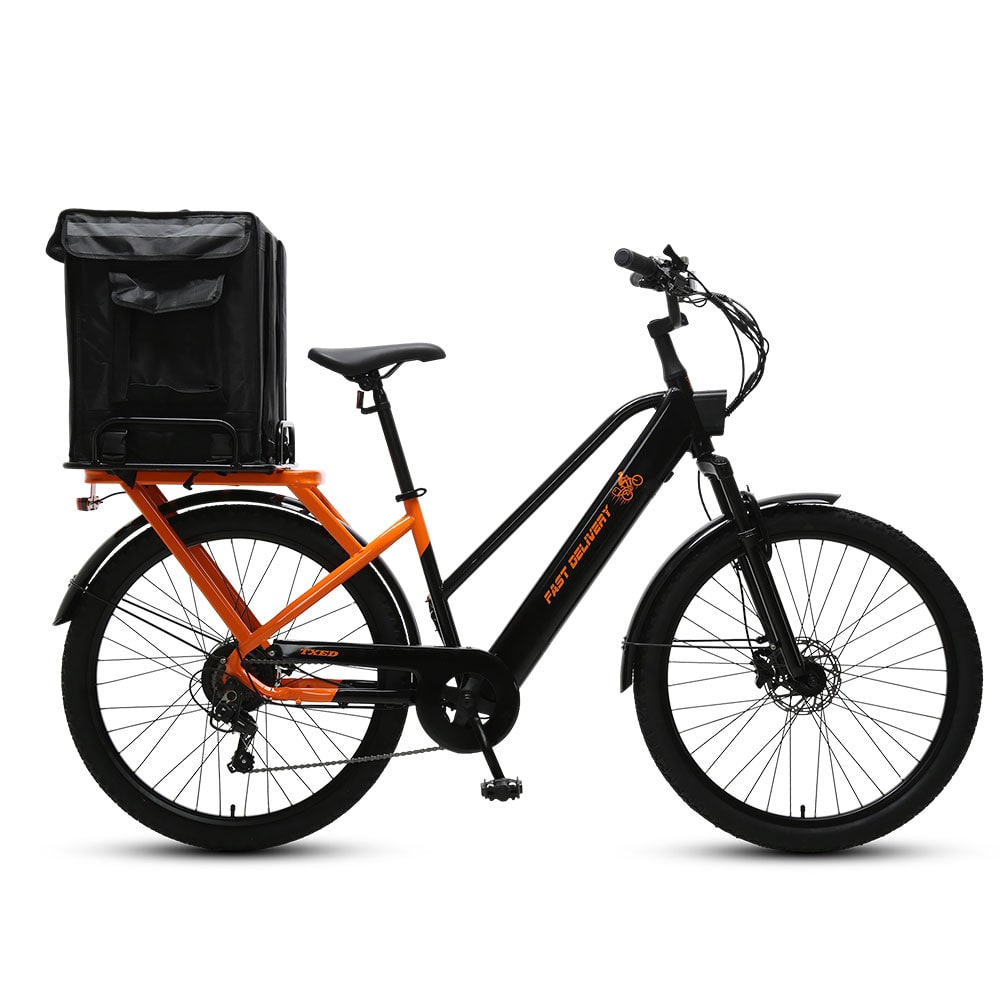
The cargo e-bike market is no longer a niche experiment. With zero-emission zones expanding across Europe, rising fuel costs, and proven cost advantages over vans, delivery e-bikes have become essential fleet infrastructure for last-mile logistics operators.
But choosing the right model is not straightforward. A bike optimized for urban food delivery will fail in heavy parcel routes. A high-power cargo bike built for 150 kg loads is overkill—and overpriced—for document couriers. The wrong choice means either underutilized capacity or operational bottlenecks.
This guide walks through the decision framework: what specs actually matter, how to match vehicle type to delivery scenario, and how TXED's delivery e-bike lineup maps to real-world fleet needs.
Step 1: Define Your Delivery Scenario
Before evaluating specs, clarify what your fleet will actually do. Delivery e-bikes are not one-size-fits-all. The right model depends on four operational variables:
1. Payload Type and Weight
- Light parcels and documents (10–30 kg): Courier services, same-day delivery, legal documents, small e-commerce packages.
- Medium loads (30–80 kg): Food delivery with insulated boxes, grocery orders, pharmacy supplies, retail restocking.
- Heavy cargo (80–150 kg): Multi-parcel routes, wholesale orders, beverage delivery, construction supplies, large e-commerce consolidation.
Your average payload determines minimum load capacity, motor torque requirements, and frame durability standards. Underspecifying here leads to premature frame fatigue and motor burnout.
2. Daily Range and Shift Pattern
- Short urban loops (20–40 km/day): Dense city centers with frequent stops, hub-based operations, or half-shift routes.
- Standard delivery routes (40–80 km/day): Full-day shifts covering suburban zones, mixed urban/residential areas.
- Extended operations (80+ km/day): Multi-shift use, rural delivery extensions, or fleets without midday recharge access.
Battery capacity is the limiting factor. A 500 Wh battery provides roughly 40–60 km real-world range under load. For routes beyond 60 km, dual-battery systems or swappable battery infrastructure become necessary.
3. Terrain and Road Conditions
- Flat urban environments: Standard hub motors (250–350W) are sufficient. Prioritize efficiency over peak power.
- Hilly or mixed terrain: Higher torque motors (500W+) and lower gear ratios prevent rider fatigue and maintain speed on inclines.
- Unpaved or rough surfaces: Fat tires (3.0–4.0 inches), front suspension, and reinforced frames absorb shock and improve traction.
Motor power and tire width should match your worst regular route condition, not your average condition. A 250W motor will struggle on a 12% grade with 60 kg of cargo, regardless of how flat the rest of the route is.
4. Regulatory Environment
In the EU, electric bikes are classified as EPACs (Electrically Power Assisted Cycles) under EN 15194 if they meet these criteria:
- Motor power ≤250W (nominal)
- Motor assistance cuts off at 25 km/h
- Pedal-assist only (or throttle limited to 6 km/h for walk-assist)
Bikes meeting EN 15194 require no license, registration, or insurance in most EU markets. Models exceeding these limits (e.g., 500W or 750W motors, 45 km/h speed) are classified as L1e-B mopeds, requiring registration, insurance, helmet mandates, and restricted access to bike lanes. For commercial fleets, EPAC compliance is usually the target to minimize regulatory friction.
Step 2: Decode the Specs That Actually Matter
E-bike spec sheets are full of numbers. Not all of them are equally important. Here is what to focus on when comparing models:
Load Capacity (kg)
This is the maximum safe weight the bike can carry, including rider, cargo, and accessories. It is determined by frame strength, wheel rating, and brake capacity.
- 50–80 kg: Light courier and food delivery
- 80–120 kg: Standard parcel delivery and grocery routes
- 120–150 kg: Heavy cargo, wholesale orders, multi-stop consolidation
Do not run bikes at 100% capacity continuously. For fleet longevity, target 70–80% of rated capacity as your operational maximum.
Range (km)
Advertised range is tested under ideal conditions: flat terrain, 70 kg total weight, 20°C temperature, low pedal-assist level. Real-world range with cargo, hills, and weather is typically 60–70% of the rated figure.
Battery capacity is the determining factor:
- 36V 13Ah = 468 Wh → ~30–50 km real-world range
- 48V 14Ah = 672 Wh → ~40–60 km real-world range
- 48V 20Ah = 960 Wh → ~60–90 km real-world range
- Dual 36V 40Ah = 1,440 Wh → ~80–120 km real-world range
For multi-shift operations or routes over 60 km, dual-battery systems or swappable batteries are essential. Single-battery models should have charging infrastructure at the hub for midday top-ups.
Motor Power (W) and Torque (Nm)
Motor power determines sustained speed and hill-climbing ability under load. Torque measures rotational force—critical for acceleration and steep grades.
- 250W hub motors: EU EPAC-compliant, suitable for flat urban routes with light-to-medium cargo.
- 350W hub motors: Better sustained performance under load, handles moderate hills, common in North American and Asian markets.
- 500–750W hub motors: High-performance cargo bikes for heavy loads, steep terrain, or high-speed operations. Requires L1e-B classification in EU.
Torque ratings (often 40–85 Nm for cargo bikes) matter more than peak wattage for delivery applications. A 500W motor with 80 Nm torque will outperform a 750W motor with 50 Nm on hills and from standstill starts.
Braking System
Cargo e-bikes carry heavy loads and reach higher speeds than standard bicycles. Brake performance is non-negotiable for safety and liability management.
- Mechanical disc brakes: Entry-level, adequate for flat terrain and light loads. Require more frequent adjustment.
- Hydraulic disc brakes: Superior stopping power, better modulation, less maintenance. Standard for commercial cargo bikes over 80 kg capacity.
For fleet operations, hydraulic disc brakes reduce maintenance downtime and improve rider safety, particularly in wet conditions or emergency stops.
Frame and Wheel Size
Wheel size affects ride quality, stability, and cargo platform design:
- 20-inch wheels: Compact, agile, lower center of gravity. Common in urban delivery bikes with front or rear cargo racks.
- 24-inch wheels: Balance between maneuverability and stability. Popular for cargo trikes and mid-capacity delivery bikes.
- 26–27.5-inch wheels: Better rolling efficiency and comfort over longer distances. Preferred for courier bikes and mixed urban/suburban routes.
Smaller wheels make the bike easier to handle in tight spaces and lower the cargo platform for easier loading. Larger wheels improve efficiency and comfort on longer routes.
Step 3: Match TXED Models to Delivery Scenarios
TXED manufactures seven delivery e-bike models, each optimized for different operational profiles. Here is how they map to real-world fleet needs:
Scenario A: Urban Food Delivery and Light Parcels
Requirements: Lightweight, agile, short-range, frequent stops, insulated cargo box compatibility, regulatory compliance.
Recommended Model: TXED 27.5" OEM/ODM Courier E-Bike
- Motor: 250W hub (EU EPAC-compliant)
- Battery: 36V 10.4Ah (374 Wh)
- Range: 31–60 km
- Max Speed: ≤25 km/h
- Key Features: 7-speed gears, front suspension, hydraulic disc brakes, aluminum frame, integrated insulated delivery box and rear rack
This model is purpose-built for last-mile food delivery and document couriers. The 27.5-inch wheels balance maneuverability with ride comfort. The insulated box keeps food hot or cold. The 250W motor and ≤25 km/h speed keep it EPAC-compliant across Europe. OEM/ODM flexibility allows fleet branding customization.
Scenario B: Standard Parcel Delivery (Urban and Suburban)
Requirements: Medium payload (60–100 kg), full-day range (60–80 km), reliable on mixed terrain, cost-effective at scale.
Recommended Model: TXED Hot Selling Delivery Electric Bike
- Motor: 350W hub
- Battery: 36V 40Ah (1,440 Wh)
- Range: 80–120 km
- Load Capacity: 100 kg
- Key Features: Front suspension, 7-speed gears, mechanical disc brakes, 20-inch wheels
The "Best Range" badge is earned. With 1,440 Wh of battery capacity, this model handles full-day shifts without midday recharging. The 350W motor provides reliable performance under load. The 20-inch wheels lower the cargo platform for easier parcel loading. This is the workhorse model for standard logistics fleets.
Scenario C: Heavy Cargo and Multi-Parcel Routes
Requirements: High payload capacity (100–150 kg), powerful motor for hills and heavy loads, reinforced frame, maximum stability.
Recommended Models:
Option 1: TXED Fast Cargo III 24" Suspension Cargo Bike
- Motor: 500W hub
- Torque: 80–85 Nm
- Battery: 48V 14Ah (672 Wh)
- Range: 40–50 km
- Key Features: Front suspension fork, torque sensor pedal assist + throttle, 7-speed gears, hydraulic disc brakes, integrated rear seat and rack
The highest torque in the TXED lineup (85 Nm) makes this the go-to model for hilly routes and heavy cargo. The 500W motor provides strong acceleration and sustained hill-climbing. The integrated rear seat allows passenger transport in addition to cargo, making it versatile for mixed-use operations. Note: 500W motor may require L1e-B classification in EU markets.
Option 2: TXED High-Capacity 20" Fat Tire E-Bike
- Motor: 750W brushless hub
- Battery: 48V 20Ah (960 Wh)
- Range: 80 km
- Load Capacity: 120 kg
- Max Speed: 45 km/h
- Key Features: Fat tire 20×4.0, hydraulic disc brakes, aluminum frame
The highest power and speed in the TXED delivery range. The 750W motor and fat tires handle unpaved roads, snow, and steep grades. The 45 km/h speed makes it suitable for longer suburban routes where speed matters. This model is classified as an L1e-B moped in the EU and requires registration and insurance. Best for markets with less restrictive e-bike regulations or for operators willing to manage moped licensing.
Scenario D: Maximum Stability and Safety (Elderly Riders, Uneven Terrain)
Requirements: Three-wheel stability, easy mounting/dismounting, high load capacity, visibility and lighting for urban safety.
Recommended Model: TXED 24" 3-Wheel Electric Delivery Tricycle
- Motor: 250W front hub
- Battery: 36V 13Ah (468 Wh)
- Range: 30–50 km
- Load Capacity: 150 kg
- Key Features: 3-wheel stability, front and rear disc brakes, LCD display, rear cargo basket, front and rear lights
The three-wheel design eliminates balance concerns, making this model suitable for riders with limited cycling experience or physical limitations. The 150 kg load capacity is the highest in the lineup. The large rear cargo basket accommodates bulky items. Ideal for neighborhood delivery services, senior-friendly operations, or markets where tricycles are culturally preferred.
Scenario E: Extended Multi-Shift Operations
Requirements: Maximum battery capacity, ability to run multiple shifts without recharging, standard payload capacity, reliable performance over long hours.
Recommended Model: TXED Long-Endurance Double Battery Delivery E-Bike
- Motor: 350W hub
- Battery: Dual 48V 15Ah (1,440 Wh total)
- Range: >60 km (often 80–100 km real-world)
- Load Capacity: 100 kg
- Key Features: 26-inch wheels, hydraulic disc brakes, single-speed, alloy frame
The dual-battery system delivers the longest operational time in the TXED range. This model is built for fleets that run two or three shifts per day on the same bike, or for routes that exceed 80 km without charging access. The 26-inch wheels improve efficiency on longer routes. The trade-off is weight and cost—but for high-utilization fleets, the battery capacity pays for itself in reduced charging downtime.
TXED Delivery E-Bike Comparison Table
| Model | Best For | Motor | Battery | Range | Load Cap. | Wheel | EU EPAC |
|---|---|---|---|---|---|---|---|
| 27.5" OEM Courier | Food delivery, documents | 250W | 36V 10.4Ah | 31–60 km | — | 27.5" | ✓ |
| Hot Selling Delivery | Standard parcels, full-day | 350W | 36V 40Ah | 80–120 km | 100 kg | 20" | — |
| Long-Range City Bike | Urban light cargo | 250W | 48V 20.8Ah | 80 km | 80 kg | 20" | ✓ |
| High-Capacity Fat Tire | Heavy cargo, hills, rough terrain | 750W | 48V 20Ah | 80 km | 120 kg | 20" | ✗ |
| Long-Endurance Double Battery | Multi-shift, extended routes | 350W | Dual 48V 15Ah | >60 km | 100 kg | 26" | — |
| 24" 3-Wheel Tricycle | Stability, high load, easy use | 250W | 36V 13Ah | 30–50 km | 150 kg | 24" | ✓ |
| Fast Cargo III | Heavy cargo, hills, torque | 500W | 48V 14Ah | 40–50 km | — | 24" | ✗ |
Step 4: Fleet Economics and Total Cost of Ownership
Choosing a delivery e-bike is not only about technical specs. It is also a financial decision. For fleet operators, total cost of ownership (TCO) over 3–5 years matters more than upfront purchase price.
Key TCO Components
- Acquisition cost: Purchase price, import duties, VAT, and initial setup.
- Energy cost: Electricity to charge batteries. Roughly €0.10–0.20 per full charge depending on battery size and local rates.
- Maintenance cost: Brake pads, tires, chain, battery replacement (typically after 500–800 charge cycles or 3–5 years). Hydraulic brakes reduce maintenance frequency compared to mechanical systems.
- Downtime cost: Lost revenue when bikes are out of service for repairs. Higher-quality components (hydraulic brakes, name-brand motors, reinforced frames) reduce downtime.
- Regulatory compliance cost: For non-EPAC models (500W+, 45 km/h speed), add registration, insurance, and helmet costs in EU markets.
E-Bike vs. Electric Van: The Numbers
A cargo e-bike costs €4,000–8,000 depending on specifications. An electric van costs €35,000–50,000. But the TCO gap is even wider:
- Insurance: E-bike (EPAC): €0–200/year. Electric van: €2,000–4,000/year.
- Licensing and registration: E-bike (EPAC): none. Electric van: commercial driver's license, registration fees, road tax.
- Parking and access: E-bikes access pedestrian zones and bike lanes, park for free. Vans face congestion charges (e.g., London ULEZ), paid parking, and restricted access to city centers.
- Maintenance: E-bikes: €200–400/year. Electric vans: €1,500–3,000/year.
For urban last-mile delivery operations within 5 km of a hub, cargo e-bikes deliver comparable parcel volume at 20–30% of the operating cost of electric vans. The crossover point is around 120–150 kg payload or 15+ km from hub. Beyond that, vans regain economic advantage.
Battery Life and Replacement Planning
Lithium-ion batteries degrade over time and charge cycles. Typical battery lifespan is 500–800 full charge cycles before capacity drops to 70–80% of original.
For a delivery bike covering 50 km/day with 60 km battery range, that's roughly one full cycle per day, or 500 days = ~18 months of daily use before noticeable degradation. Fleet operators should budget for battery replacement every 2–3 years for high-use bikes.
Dual-battery systems reduce per-battery wear by cycling between packs, potentially extending lifespan to 3–4 years. Battery replacement cost is typically 20–30% of original bike price.
Step 5: OEM and ODM Customization for Fleet Branding
For fleet operators launching branded delivery services, visual identity matters. TXED offers OEM (Original Equipment Manufacturer) and ODM (Original Design Manufacturer) services for delivery e-bike customization:
- Custom frame colors and decals: Match your corporate branding or create a distinctive fleet identity.
- Logo integration: Frame, cargo box, battery cover, and handlebar grips can carry your logo.
- Cargo box design: Custom dimensions, insulation specifications, and mounting systems for specific delivery needs.
- Component selection: Choose between mechanical or hydraulic brakes, battery capacity options, display units, and lighting systems.
- Fleet management hardware: Pre-installed GPS trackers, IoT modules, or integrated lock systems can be spec'd at the factory level.
TXED's minimum order quantity (MOQ) for OEM customization is 50 units per model—covering color and logo customization, component-level customization, and full ODM projects (custom frame geometry, unique design).
For startups and small operators testing the market, TXED's standard models with aftermarket branding (vinyl wraps, custom cargo boxes) offer a lower-MOQ entry point before committing to factory customization.
Common Mistakes to Avoid When Choosing Delivery E-Bikes
After working with hundreds of fleet operators across Europe, North America, and Asia, TXED has observed recurring decision-making errors that lead to underperforming fleets:
Mistake 1: Prioritizing Low Upfront Cost Over TCO
Cheap bikes with mechanical brakes, low-capacity batteries, and generic components require frequent maintenance and suffer high downtime. A bike that costs €3,500 but needs service every 6 weeks has worse economics than a €5,500 bike with hydraulic brakes and name-brand components that runs for 6 months between services.
Mistake 2: Underestimating Real-World Range Needs
Advertised range is tested under ideal conditions. A bike rated for 60 km will deliver 40–45 km in real-world use with cargo, hills, and cold weather. Always spec battery capacity for 150% of your average daily route distance to account for degradation and worst-case conditions.
Mistake 3: Ignoring Regulatory Compliance Until After Purchase
Buying 500W or 750W bikes for European markets without understanding L1e-B classification requirements leads to surprise insurance, registration, and licensing costs. Always clarify local regulations before committing to a spec. For most EU operators, staying within EPAC limits (250W, 25 km/h) is the path of least resistance.
Mistake 4: Single-Sourcing Without Testing
Fleet procurement is high-stakes. Order 2–5 units of your top choice and run a 3-month pilot before committing to 100+ units. Test in your actual operating conditions: your routes, your riders, your weather. What works for a Berlin courier fleet may fail in a hilly San Francisco environment.
Mistake 5: Neglecting After-Sales and Spare Parts Infrastructure
A great bike with no local service network is a liability. Before ordering, confirm that replacement parts (brake pads, tires, displays, battery cells) are available locally or can be shipped within 48 hours. Downtime kills fleet economics. Choose manufacturers with established EU or North American distribution networks.
Final Recommendations: How to Make the Decision
Choosing the right delivery e-bike comes down to matching your operational reality to the right technical specifications. Here is the decision framework in summary:
- Define your primary delivery scenario: Light parcels, standard logistics, heavy cargo, or multi-shift operations.
- Calculate your real-world range needs: Average daily distance × 1.5 = minimum battery capacity target.
- Verify regulatory compliance: For EU fleets, staying within EPAC limits (250W, 25 km/h) avoids registration and insurance complexity.
- Prioritize component quality over upfront price: Hydraulic brakes, name-brand motors, and reinforced frames reduce TCO over 3–5 years.
- Run a pilot before scaling: Order 2–5 bikes, test for 3 months, measure real-world range, maintenance frequency, and rider feedback before ordering 100 units.
- Confirm spare parts and service availability: Choose manufacturers with established distribution and service networks in your market.
Work with TXED for Your Fleet Deployment
TXED specializes in commercial delivery e-bikes for B2B fleet operators. With 31 years of bicycle manufacturing experience, annual production capacity of 250,000 units, and proven export track record to Europe and North America, we understand what fleet buyers need: reliable hardware, flexible customization, and responsive after-sales support.
Our delivery e-bike lineup spans seven models optimized for different operational profiles, from EPAC-compliant urban couriers to high-power cargo haulers. We support OEM/ODM customization for fleet branding and can work with you to spec the right configuration for your market and use case.
Whether you are launching a new last-mile delivery service, expanding an existing fleet, or replacing aging diesel vehicles to comply with zero-emission zones, TXED can supply the bikes and work with you on pilot programs, phased rollouts, and long-term service agreements.
Ready to start? Explore our full delivery e-bike lineup or contact our B2B team to discuss your fleet requirements, request detailed specifications, or arrange sample units for testing.