Delivery & Cargo E-Bike Use Cases: How Businesses Are Cutting Last-Mile Costs by up to 88%
 Share on X
 LinkedIn
 Facebook
 Reddit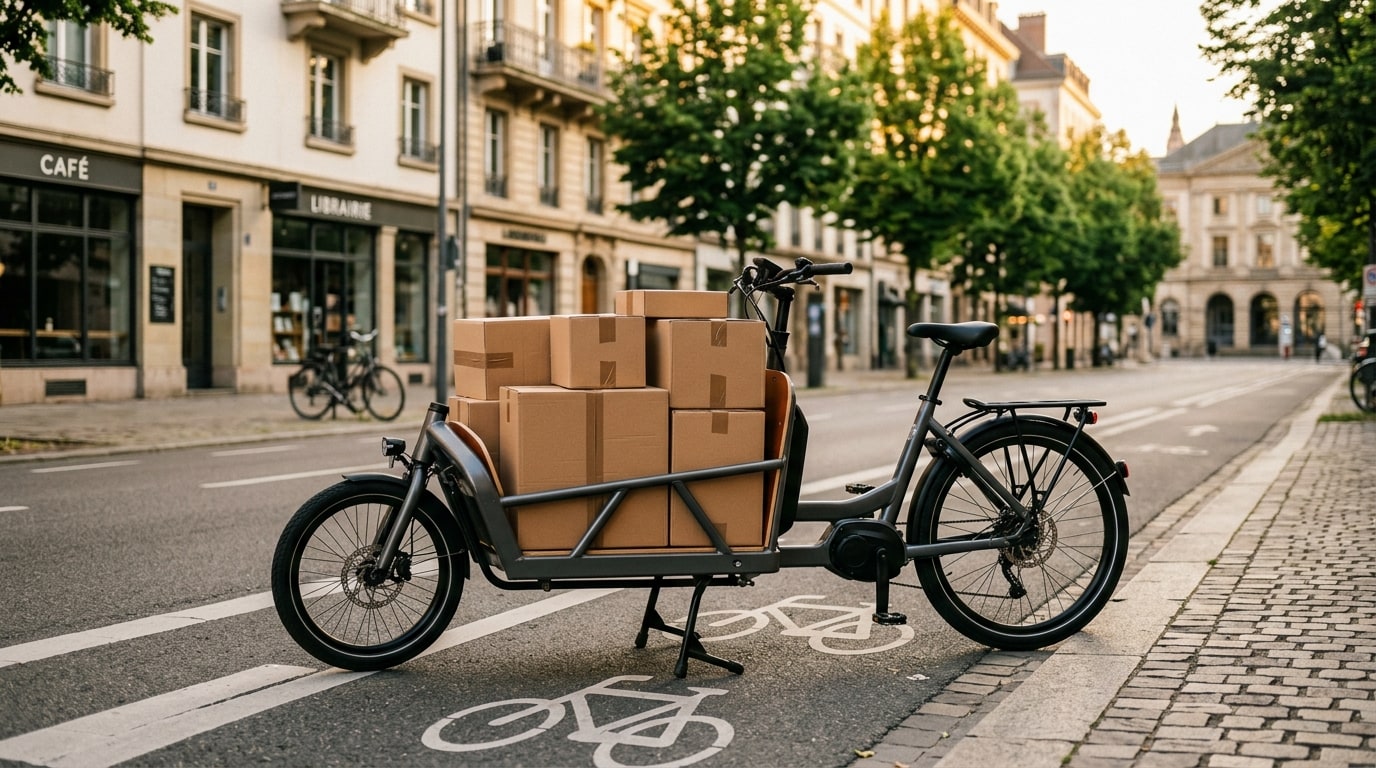
Every logistics manager running urban delivery routes faces the same spreadsheet problem: fuel costs climbing, congestion charges expanding, driver wages rising, and customers demanding faster windows. Meanwhile, a cargo e-bike sitting in a depot costs under $0.02 per kilometer to charge, needs no parking spot, skips every traffic jam, and pays zero congestion fees. The math is not subtle.
Yet the question fleet operators actually ask is not "are cargo e-bikes cheaper?" — it is "where exactly do they fit my operation, and how much will I actually save?" The answer depends on the use case. A food-delivery platform optimizing hot-food windows operates differently from a postal service running 80-stop letter routes, and both differ from a facilities team shuttling supplies across a hospital campus.
This guide maps seven proven use cases for delivery and cargo e-bikes, then walks through the cost savings line by line so you can build a business case for your own fleet. For related analysis, see our cargo e-bike vs. van vs. e-moped TCO breakdown, the fleet buyer's guide to delivery e-bikes, and our customer classification guide.
Executive Summary
Across seven commercial use cases — last-mile parcel delivery, food and meal delivery, grocery and pharmacy loops, postal and mail routes, campus and facility logistics, trades and field service, and municipal operations — cargo e-bikes reduce per-delivery costs by 40%–65% compared to vans on routes under 30 km with 20+ stops per shift, and cut total non-labor vehicle cost per day by ~88% ($67–$127/day for a van vs. $7.30–$15.60/day for a cargo e-bike). The savings come from five buckets: fuel and energy (90%+ reduction), vehicle acquisition and depreciation (50%–70% lower), insurance and registration (60%–80% lower), parking and congestion charges (near-zero), and maintenance (40%–60% lower). Payback periods range from 4 to 14 months depending on the replaced vehicle and route density.
1. Last-Mile Parcel Delivery
The Use Case
This is the highest-volume application. 3PL providers, e-commerce fulfillment companies, and courier services deploy cargo e-bikes from urban micro-hubs to cover the final 1–8 km of a parcel's journey. A typical shift involves 40–80 stops within a 5 km radius, carrying 15–60 kg of mixed parcels in an enclosed cargo box or rear rack system.
The operational advantage is time: in congested city centers, a cargo e-bike completes a 50-stop route in the same elapsed time as a delivery van because the van spends 30%–40% of its shift searching for parking, walking to doors, and idling in traffic. The bike pulls up to the curb, hands over the parcel, and rides to the next stop.
The Cost Savings
| Cost Line | Delivery Van (per day) | Cargo E-Bike (per day) | Savings |
|---|---|---|---|
| Fuel / Energy | $18–$30 | $0.30–$0.60 | ~97% |
| Vehicle depreciation | $25–$45 | $4–$8 | ~80% |
| Insurance | $8–$15 | $1–$3 | ~80% |
| Parking / congestion | $10–$25 | $0 | 100% |
| Maintenance | $6–$12 | $2–$4 | ~60% |
| Daily Total | $67–$127 | $7.30–$15.60 | ~88%–89% |
Payback period: A commercial cargo e-bike priced at $2,500–$4,500 pays for itself in 4–8 months against a leased van, faster if the city imposes congestion or low-emission zone (LEZ) charges.
2. Food and Meal Delivery
The Use Case
Food delivery platforms, ghost kitchens, and restaurant chains use delivery e-bikes with insulated cargo boxes (30–60 litre capacity) mounted on rear racks or front cargo platforms. The critical metric is delivery window: hot food must arrive within 15–30 minutes. In dense urban cores, e-bikes consistently beat cars and mopeds on this metric because they avoid traffic and park instantly.
A food courier on an e-bike typically completes 3–5 deliveries per hour in a 3 km radius, carrying 5–15 kg per trip. The short range means battery capacity requirements are modest (typically 400–500 Wh), and a single charge easily covers a full 6–8 hour shift.
The Cost Savings
Compared to petrol mopeds (the traditional food delivery vehicle in most markets):
- Fuel: $0.15/day for electricity vs. $8–$15/day for petrol — a 98% reduction.
- Insurance and registration: E-bikes classified as EPACs (EU) or Class 1/2 (US) require no vehicle registration and minimal or no insurance — saving $1,200–$2,500/year per vehicle.
- Maintenance: No oil changes, no exhaust systems, no engine overhauls. Brake pads, tires, and chain replacement are the main recurring costs — roughly $200–$400/year vs. $800–$1,500/year for a moped.
- Rider onboarding: No motorcycle license required in most jurisdictions, widening the labor pool and reducing training costs.
3. Grocery and Pharmacy Delivery
The Use Case
Supermarket chains, online grocery platforms, and pharmacy networks are deploying front-loader cargo e-bikes or cargo trikes for same-day and next-hour delivery from neighborhood stores. A typical grocery delivery carries 20–50 kg (4–8 grocery bags) per trip within a 5 km radius. Pharmacy runs are lighter (2–10 kg) but time-critical — prescriptions promised within 60 minutes.
The key operational advantage: a cargo e-bike can run 6–10 delivery loops per shift from a single store, serving the same catchment area that would otherwise require a van sitting in traffic. The bike's compact footprint means it can stage directly at the store's loading dock or sidewalk, eliminating the van's loading-bay bottleneck.
The Cost Savings
Grocery operators report 45%–55% lower per-delivery costs when switching from vans to cargo e-bikes on routes under 5 km. The savings are amplified by avoided delivery failures: a bike courier can call the customer from the doorstep and wait without blocking traffic, reducing failed-delivery rates (and the cost of re-delivery) by up to 30%.
4. Postal and Mail Routes
The Use Case
National postal services across Europe — including Deutsche Post (Germany), PostNL (Netherlands), Royal Mail (UK), and La Poste (France) — have been early and aggressive adopters of cargo e-bikes. A postal route may involve 100–200+ stops per shift, covering 15–25 km with a payload of 30–80 kg of letters, small parcels, and registered mail.
The postal e-bike is typically a heavy-duty front-loader or longtail with a weatherproof cargo container, integrated GPS tracking, and swappable battery packs. The route structure — high stop density, low per-stop dwell time, predictable daily pattern — is the ideal profile for e-bike economics.
The Cost Savings
Deutsche Post has reported that its e-bike fleet operates at roughly one-third the cost per route compared to its diesel van fleet on equivalent urban loops. The primary savings: zero fuel costs, no emissions-zone fees, lower vehicle acquisition (€4,000–€7,000 vs. €25,000+ for an electric van), and dramatically lower maintenance. The fleet also achieves higher route completion rates because mail carriers don't lose time to parking searches in pedestrian zones and historic city centers.
5. Campus and Facility Logistics
The Use Case
Universities, hospitals, corporate campuses, airports, and resorts use cargo e-bikes and e-trikes for internal logistics: moving mail, medical supplies, catering, laundry, tools, and parts between buildings. Routes are typically 0.5–5 km, payloads are 10–80 kg, and the environments are pedestrian-priority zones where vans are either prohibited, speed-limited, or disruptive.
A hospital logistics team, for example, might use a fleet of 5–8 cargo e-trikes to replace 2–3 vans that previously shuttled between the main building, labs, pharmacy, and satellite clinics. The trikes navigate pathways too narrow for vans and park at building entrances, cutting delivery time in half.
The Cost Savings
Campus fleets see 50%–70% total cost reductions vs. light utility vehicles. The biggest savings are often hidden: avoided infrastructure costs. Cargo e-bikes don't need vehicle-rated roads, parking structures, or fueling stations. A simple covered rack with a standard electrical outlet is the entire depot. For a hospital or university planning new construction, the avoided capital expenditure on vehicle infrastructure can exceed the cost of the entire e-bike fleet.
6. Trades and Field Service
The Use Case
Plumbers, electricians, HVAC technicians, and facilities maintenance teams operating in dense urban areas are adopting longtail cargo e-bikes with custom tool storage. A typical tradesperson carries 20–40 kg of tools and parts on 3–6 service calls per day within a 10 km radius. The cargo platform replaces the van's tool compartment, with modular panniers, lockable toolboxes, and weatherproof enclosures.
The Cost Savings
The economics are compelling for urban tradespeople:
- Vehicle cost: $2,000–$4,000 for a fully equipped longtail vs. $30,000–$45,000 for a work van — a 90% CAPEX reduction.
- Parking fines eliminated: Urban tradespeople in cities like London, New York, and Paris report spending $2,000–$5,000/year on parking tickets alone. A cargo e-bike parks legally anywhere a bicycle can.
- Billable hours recovered: Trades estimate 45–90 minutes per day lost to parking searches and traffic. At billing rates of $75–$150/hour, that is $4,000–$15,000 in recovered revenue per year.
- No congestion charges: London's ULEZ and Congestion Charge together can cost van operators £27.50/day ($35). Over 250 working days, that is $8,750/year — gone.
7. Municipal and City Services
The Use Case
City governments use cargo e-bikes and e-trikes for park maintenance, waste collection (litter bins), street cleaning, parking enforcement, event logistics, and mobile services (library, health screening). These operations share a profile: short routes, frequent stops, low payloads, and politically visible sustainability goals. A municipal parks department might replace 2 diesel utility vehicles with 4 cargo e-trikes covering the same green spaces at half the annual cost.
The Cost Savings
Municipal operators benefit from the same direct cost reductions as private fleets, plus an additional lever: avoided emissions reporting liabilities. As cities commit to net-zero fleet targets by 2030–2035, every diesel van replaced by a cargo e-bike directly improves the city's Scope 1 emissions inventory. Several EU cities now offer procurement subsidies of 30%–50% for cargo e-bike fleets used in municipal operations, further improving payback periods to under 6 months.
The Five Buckets of Cost Savings
Across all seven use cases, the cost advantages of cargo e-bikes cluster into five categories. Understanding each bucket helps fleet operators build accurate business cases:
| Savings Bucket | What It Covers | Typical Reduction vs. Van | Annual Savings per Vehicle |
|---|---|---|---|
| 1. Fuel & Energy | Diesel/petrol replaced by grid electricity | 90%–98% | $4,000–$7,500 |
| 2. Vehicle CAPEX & Depreciation | Purchase/lease cost amortized over lifespan | 50%–70% | $3,000–$8,000 |
| 3. Insurance & Registration | Liability, comprehensive, road tax, MOT | 60%–80% | $1,500–$3,500 |
| 4. Parking & Congestion | Permits, meters, fines, LEZ/ULEZ charges | 90%–100% | $2,000–$9,000 |
| 5. Maintenance & Repair | Scheduled service, wear parts, breakdowns | 40%–60% | $1,000–$2,500 |
| Total Annual Savings per Vehicle | $11,500–$30,500 | ||
Hidden Savings Most Fleet Models Miss
The five buckets above capture direct, measurable costs. But experienced fleet operators also report significant indirect savings that rarely appear in standard TCO models:
- Faster onboarding: No commercial driver's license (CDL) or motorcycle license required. Training time drops from days to hours, and the eligible labor pool expands dramatically.
- Reduced failed deliveries: E-bike couriers park at the door, not around the block. First-attempt success rates rise 15%–30%, and each avoided re-delivery saves $5–$15 in direct costs.
- Higher customer satisfaction: Faster, quieter, greener deliveries improve brand perception. Several food platforms report measurably higher rider ratings for e-bike couriers vs. moped riders.
- Depot simplification: A cargo e-bike needs a 2 m² parking footprint and a standard electrical outlet. A van needs a parking bay, potentially a fuel card system, and commercial insurance on the premises. Micro-hub depots for e-bike fleets can be located in retail storefronts, shipping containers, or unused commercial spaces at a fraction of traditional warehouse costs.
- Regulatory future-proofing: Low-emission zones are expanding in every major European city, and US cities are following. Cargo e-bikes are permanently exempt from all emission-based restrictions and charges. A fleet that transitions now avoids the cost and disruption of forced compliance later.
When a Cargo E-Bike Is NOT the Right Choice
Intellectual honesty matters in fleet planning. Cargo e-bikes are not a universal replacement for motor vehicles. They are the wrong tool when:
- Payload exceeds 150–200 kg per trip. Even heavy-duty cargo trikes top out at 200–250 kg gross vehicle weight. Wholesale beverage delivery, heavy equipment, and large-parcel logistics still need vans or trucks.
- Route distance exceeds 30–40 km per shift. Battery range, rider fatigue, and time economics favor motor vehicles on long, sparse suburban routes.
- Stop density is low. If a route has fewer than 10–15 stops per shift spread over a wide area, the van's speed advantage between stops outweighs the bike's parking and access advantages.
- Extreme weather is the norm. Sustained heavy rain, snow, or extreme heat reduces rider productivity and increases safety risk. Enclosed vehicles win in these conditions (though e-bike operators in Scandinavian and Canadian cities have shown that studded tires and weather enclosures extend the usable season significantly).
- Cargo requires climate control. Frozen goods, temperature-sensitive pharmaceuticals, and other cold-chain cargo require powered refrigeration that exceeds an e-bike's electrical capacity.
The decision framework is straightforward: if your route is dense, urban, under 30 km, with 20+ stops and payloads under 150 kg, a cargo e-bike will almost certainly be cheaper than whatever you are running now. Use our TCO calculator to model your specific numbers.
How to Get Started: A Practical Roadmap
- Audit your routes. Identify urban routes under 30 km with 20+ stops. These are your cargo e-bike candidates. Sort by current cost-per-delivery to find the highest-ROI conversions first.
- Pilot with 3–5 vehicles. Deploy a small fleet on your best-candidate routes for 60–90 days. Measure deliveries per hour, energy cost per km, maintenance events, and rider feedback. Most operators see positive ROI within the pilot period.
- Choose the right platform. Match the bike architecture to the job. Courier racks for food and small parcels; front-loaders for grocery and mixed cargo; trikes for heavy or high-volume loads. Our fleet buyer's guide walks through the selection matrix.
- Set up micro-hub infrastructure. A cargo e-bike fleet doesn't need a warehouse — it needs charging points, secure parking, and weather protection. Shipping containers, retail storefronts, and building lobbies all work. See our micro-hub planning guide for design templates.
- Scale based on data. Once the pilot validates your cost model, expand route by route. The marginal cost of adding each bike is low, and the operational learning from the pilot transfers directly.
Ready to Build Your Business Case?
TXED manufactures commercial-grade delivery and cargo e-bikes for fleet operators worldwide, with OEM/ODM customization for payload, branding, and IoT integration. Whether you need 10 bikes for a pilot or 1,000 for a national rollout, our engineering team can spec the right platform for your use case. Contact us for fleet pricing and a custom TCO analysis →