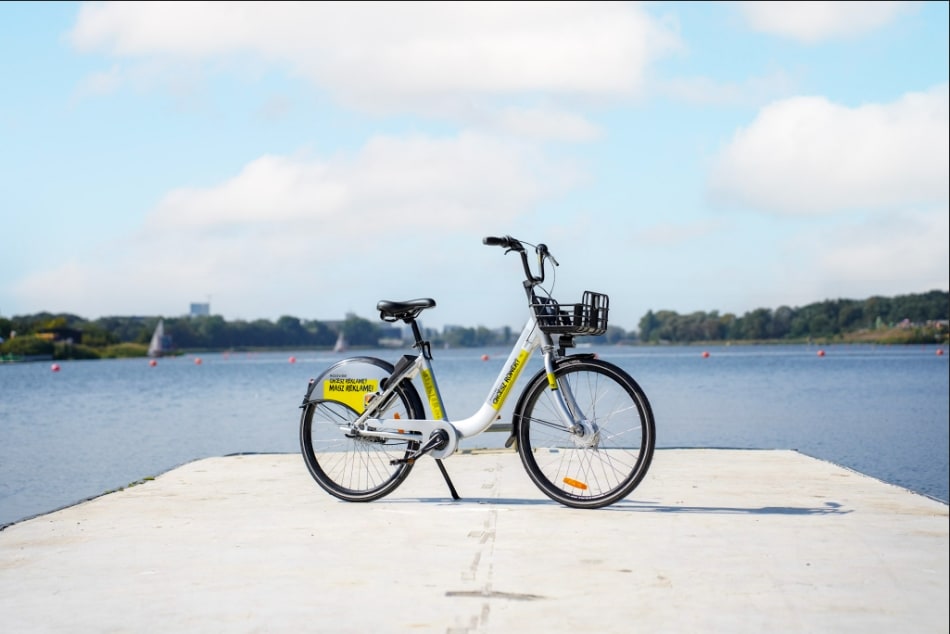
Shared E-Bike IoT Lock & Anti-Theft Design: GPS, Geofencing & Anti-Vandalism Engineering (2026 Guide)
 Share on X
 LinkedIn
 Facebook
 Reddit
In shared micromobility, unit economics rarely collapse because of low rider demand. They collapse because of fleet shrinkage—the combined toll of whole-vehicle theft, lithium-ion battery looting, cut brake or display cables, and municipal fines triggered by disorderly sidewalk parking.
First-generation bike-share operators learned this lesson the hard way. Fleets built by bolting aftermarket smart locks onto retail bicycles routinely suffered 15% to 30% annual asset loss. Vandals pried open external battery cradles with crowbars, snipped exposed motor wires in seconds, or tossed bikes into vans where single-band GPS modules lost satellite lock. Today, well-engineered commercial fleets operate at the opposite extreme: annual shrinkage below 1.5% to 2% and parking compliance above 96%.
The difference is not policing—it is defense-in-depth hardware and firmware engineering. Modern shared e-bikes treat the IoT lock, motor controller, battery management system (BMS), and mechanical frame as a single cryptographic and structural unit. This guide examines the three technical pillars behind a theft- and vandal-resistant shared e-bike fleet: connected IoT lock architecture & GPS recovery, precision geofencing & parking enforcement, and mechanical anti-vandalism design. For broader operational context, see our bike-share OPEX reduction breakdown and our campus shared e-bike launch playbook.
Key Engineering Takeaways
1. Cryptographic CAN-bus coupling beats mechanical locks alone: When the IoT module, motor controller, and smart BMS authenticate over an internal bus, a stolen bike or battery is electronically bricked—the motor phase-locks and the battery refuses to discharge outside the host frame. 2. Multi-constellation GNSS + 6-axis IMU cuts urban drift: Combining GPS, Galileo, GLONASS, and BeiDou with accelerometer wake-on-motion and an independent backup battery keeps bikes trackable for 7–14 days even if the main battery is removed. 3. Three-tier geofencing protects city permits: Automated slow-zones (10–15 km/h), no-park polygons, and Bluetooth/RTK or docked charging corrals enforce parking before billing can end. 4. Mechanical hardening stops casual vandalism: 99% internal cable routing, IoT-actuated hidden battery locks, security Torx fasteners, and puncture-proof non-inflatable tires eliminate the top 80% of street damage tickets.
Part 1: Inside the Shared E-Bike IoT Smart Lock Architecture
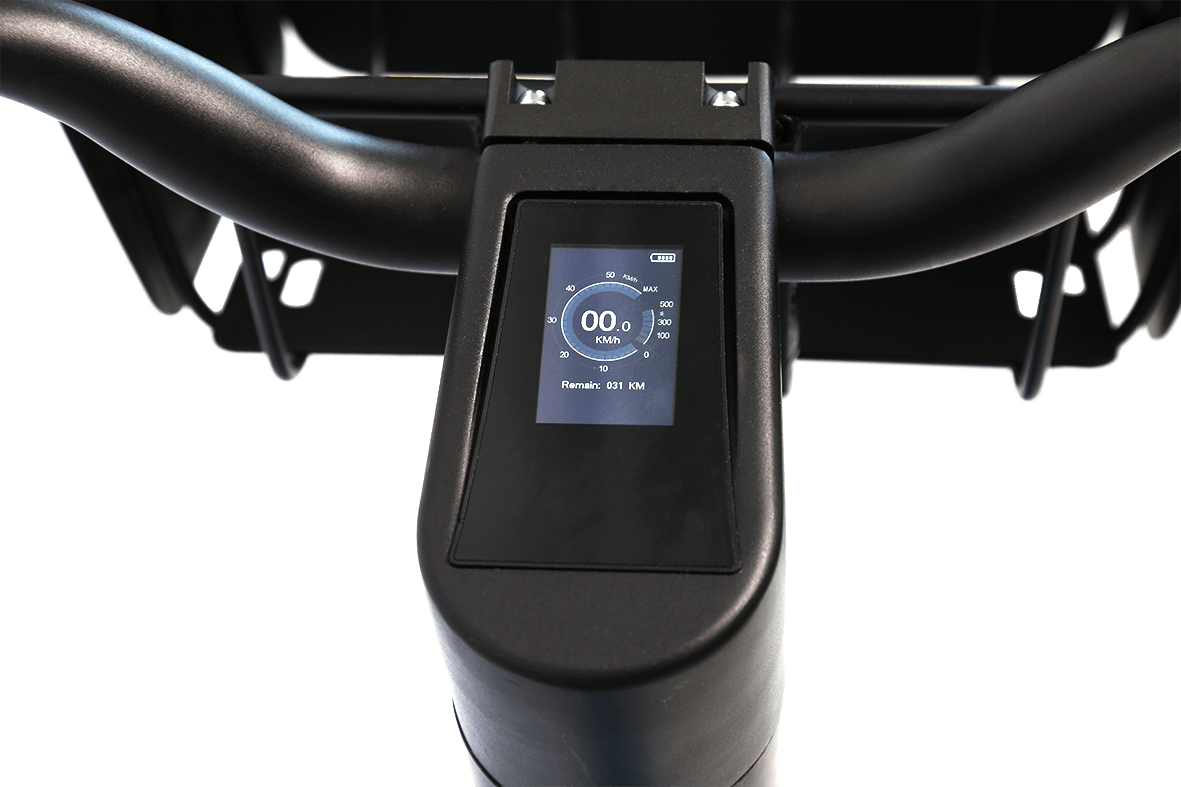
On a consumer e-bike, a lock is an accessory that stops the rear wheel from spinning. On a commercial shared e-bike, the IoT module (Vehicle Control Unit / VCU) is the central nervous system of the vehicle. Whether integrated directly into the handlebar stem—as on the TXED E Bike2Share IV and E Bike2Share VII—or paired with an automated rear-wheel ring lock and charging dock, the IoT architecture must solve four simultaneous engineering challenges: connectivity reliability, sub-second rider unlock, power redundancy, and drivetrain immobilization.
1. Dual-Channel Connectivity: 4G Cat-M1 / NB-IoT / Cat.1 + Encrypted BLE
Relying solely on cellular data for unlocking creates a frustrating 4-to-8-second delay when a rider scans a QR code inside an urban canyon or underground transit plaza. Conversely, relying solely on Bluetooth leaves the operator blind when no rider is nearby. Fleet-grade IoT locks combine both:
- Cellular WAN (4G LTE Cat.1 / Cat-M1 / NB-IoT with 2G fallback): Maintains a persistent, low-power MQTT/TLS connection to the fleet cloud via an industrial multi-carrier eSIM (MFF2 soldered chip—never a removable consumer plastic SIM card that thieves can extract and abuse for free data). Handles real-time telemetry, remote immobilization, geofence table updates, and Over-The-Air (OTA) firmware upgrades.
- Bluetooth Low Energy (BLE 5.0+): Enables sub-second keyless unlocking directly from the rider's smartphone app. When cellular coverage is weak inside a concrete parking structure, the app exchanges an encrypted, time-bound cryptographic token over BLE to unlock the bike and caches the trip start locally until cellular signal returns. Dynamic rolling session keys prevent BLE replay or relay attacks.
2. CAN-Bus / UART Cryptographic Handshake (Why Cut Wires Won't Free the Bike)
In poorly integrated fleets, the smart lock simply toggles a high/low 5V enable wire to a generic motor controller. Savvy thieves quickly learn to splice that wire and ride away with full pedal assist. A factory-integrated shared e-bike eliminates this vulnerability through mutual cryptographic authentication across four nodes on the internal CAN or UART bus:
- IoT VCU / Smart Lock: Receives the authorized unlock command from the cloud or encrypted BLE session.
- Motor Controller: Remains in an active locked state until it receives a signed heartbeat frame from the matched IoT serial ID. If the IoT module is unplugged or tampered with, the controller shorts the three brushless motor phases together—creating heavy electromagnetic regenerative drag that makes the bike exhausting to pedal even if a mechanical lock is forced open.
- Smart BMS (Battery Management System): Authenticates with the controller and IoT module before closing its high-current discharge MOSFETs. A battery pried out of a shared bike will output 0 V on a thief's workbench.
- Electronic Battery Lock & Docking Interface: Solenoid or motor-driven latches inside the downtube release the battery only when an authorized maintenance technician sends an encrypted swap command via the staff app or backend dashboard.
3. Dual-Battery Power Continuity (Tracking When the Main Pack Is Gone)
What happens if a bike's main 36V lithium battery runs down to 0%—or a thief manages to force out the main pack? Every commercial IoT module contains an internal, potted backup battery (typically a high-temperature 3.7V 1,500–3,000 mAh Li-po or LiFePO4 cell) charged automatically whenever the main 36V pack is present. The instant main power drops unexpectedly, the IoT unit fires a "Main Power Cut / Battery Tamper" high-priority alert to the operator dashboard and switches to backup survival mode—transmitting GNSS coordinates for 7 to 14 days so field recovery teams can locate the frame.
| Locking & Security Layer | Primary Mechanism | What It Prevents | Best Deployment Fit |
|---|---|---|---|
| Integrated Stem IoT + Motor Phase Lock | Embedded 4G/BLE/GNSS VCU in handlebar/stem + electromagnetic rear hub resistance | Unauthorized riding, external lock prying, display/controller theft | Dockless city fleets, campuses, hotels, and hybrid corrals |
| Automated Rear-Wheel Ring Lock | Hardened 8–10 mm steel shackle passing through rear wheel spokes (auto-unlock / manual or auto-close) | Roll-away theft when parked on public streets | High-density urban free-floating & virtual station fleets |
| IoT Electronic Battery Lock | Keyless internal latch controlled via cloud/BLE + BMS cryptographic pairing | Battery pack theft, physical lock-picking, unauthorized indoor charging | All swappable-battery and university/municipal fleets |
| Physical Charging Dock / Steel Tether Lock | Mechanical dock head or reinforced steel-wire charging cable locks bike to ground rack | Lift-into-van theft, sidewalk clutter, and overnight wind tip-overs | Station-based city systems, campuses, and resorts (see station guide) |
Part 2: Multi-Constellation GNSS Tracking & Active Theft Defense
Cheap GPS trackers work fine in an open parking lot and fail completely on a narrow European street flanked by six-story stone buildings. Signals bounce off glass and masonry—an effect known as multipath reflection—causing a parked bike to appear 40 meters away on the wrong side of a river or inside a building.
Multi-Constellation GNSS + 6-Axis IMU Sensor Fusion
To maintain reliable positioning in dense urban and wooded campus environments, commercial e-bike IoT modules replace basic GPS-only receivers with multi-constellation GNSS chipsets that simultaneously track four satellite networks—GPS (US), Galileo (EU), GLONASS (Russia), and BeiDou (China)—often paired with L1 + L5 dual-frequency reception and SBAS/RTK augmentation:
- Faster Time-To-First-Fix (TTFF): Assisted GNSS (A-GNSS) downloads ephemeris data over 4G so the bike acquires a sub-2-meter satellite fix within 2 to 5 seconds of waking up.
- 6-Axis IMU (3-Axis Accelerometer + 3-Axis Gyroscope): Continuously monitors tilt angle, vibration signature, and acceleration at micro-amp standby current. It distinguishes between a gust of wind shaking a parked bike, a truck rumbling past, a bike falling over (>60° tilt alert), and a thief lifting the bike into a vehicle.
- Wi-Fi & Cell-ID Fallback for Indoor Recovery: When a stolen bike is wheeled into a basement garage or metal shipping container where satellite signals cannot penetrate, the IoT module scans nearby Wi-Fi MAC addresses (BSSIDs) and cellular base stations, allowing operators to triangulate the building down to the street address.
The 3-Stage Anti-Theft State Machine
Continuous 1-second GPS reporting while parked would drain a bike's battery in four days. Instead, smart fleets run an event-driven 3-stage anti-theft escalation protocol:
Stage 1: Parked Deep Sleep & Heartbeat (Normal Standby)
While locked and stationary, the GNSS radio sleeps and cellular power-saving mode (PSM/eDRX) is active. The bike sends a lightweight status heartbeat (battery SoC, internal temperature, lock state) every 2 to 4 hours, drawing less than 2–5 mA. The 6-axis IMU remains armed 24/7.
Stage 2: Tamper Pre-Alarm & Deterrence (0–5 Seconds of Unauthorized Motion)
If the IMU detects sustained movement, lifting, or impact while the lock state is LOCKED, the bike immediately flashes its front/rear LED lights, sounds a warning chirp on its 95+ dB internal piezo buzzer, and engages electromagnetic motor phase braking. Over 70% of opportunistic street thefts abort at this stage because the bike becomes loud, heavy to push, and impossible to pedal.
Stage 3: Active Theft Tracking & Recovery Mode (>10 Seconds or Geofence Breach)
If movement continues beyond 10 seconds or the bike moves more than 15 meters without an active rental session, the IoT module wakes the multi-constellation GNSS receiver to high-frequency tracking (1 location packet every 5–10 seconds), triggers a continuous high-decibel siren, flags the vehicle red on the operator's live dispatch map, and pushes an automated recovery ticket with a live tracking link to field security or local police.
Part 3: Geofencing & Sub-Meter Parking Enforcement
Across Europe, North America, and Asia-Pacific, municipal tenders and university RFPs no longer treat geofencing as a bonus feature—it is a mandatory condition for operating permits. Cities demand proof that shared e-bikes will not speed through pedestrian zones or litter narrow sidewalks. Modern fleets implement a three-zone geofencing hierarchy stored both in the cloud and cached directly in the bike's onboard flash memory (so enforcement works instantaneously even in cellular dead zones):
1. Outer Service Boundary & No-Go Zones
When a rider approaches the edge of the permitted city or campus boundary—or enters a prohibited highway, nature reserve, or private residential complex—the bike executes a progressive, safety-certified intervention:
- Warning buffer (100m before boundary): The handlebar LCD flashes, the IoT buzzer emits a rhythmic double-beep, and the rider app sends a push/voice alert.
- Smooth motor ramp-down (at boundary crossing): Never cut motor power abruptly mid-pedal stroke, which can startle a rider in traffic. Instead, the controller smoothly ramps pedal-assist output from 250W down to 0W over 5 to 8 seconds while keeping headlights and taillights powered for safety.
- End-of-ride lock block: The app and IoT lock refuse to terminate billing until the bike is ridden back inside the authorized service polygon.
2. Dynamic Speed-Limit Zones (Slow Zones)
In pedestrian shopping streets, hospital courtyards, and university quads, operators draw polygon slow zones on the backend map—often scheduled by time of day (e.g., 12 km/h between 08:00 and 18:00 on weekdays; standard 20–25 km/h overnight). Because the IoT module talks directly to the motor controller over CAN/UART, the bike automatically adjusts its maximum assist speed cap within 2 seconds of crossing the polygon boundary.
3. Mandatory Parking Corrals: Solving the "Last-3-Meters" GPS Problem
Standard single-frequency GPS has a horizontal accuracy radius of 3 to 8 meters. That is accurate enough to find a bike on a street, but not accurate enough to prove whether a bike is parked neatly inside a 2-meter painted sidewalk box or blocking a wheelchair ramp right next to it. Depending on your budget and municipal requirements, four parking-verification technologies solve this:
| Parking Verification Method | Effective Accuracy | Infrastructure Needed | How It Works in Practice |
|---|---|---|---|
| Multi-GNSS + AI End-of-Ride Photo | 3 – 5 meters + visual proof | Painted pavement box or sign | GNSS verifies general zone; rider snaps a photo in-app showing bike upright inside painted lines before billing stops. |
| Dual-Frequency (L1+L5) / RTK GNSS | 0.3 – 1.0 meter | Zero street hardware (NTRIP cloud correction) | Real-Time Kinematic correction stream over 4G delivers sub-meter coordinates for virtual corrals in open/semi-open streets. |
| Bluetooth (BLE) Parking Beacons | 0.5 – 1.5 meters | Pavement-bolted BLE puck ($25–$45/spot, 3–5 yr battery) | Bike's IoT lock reads the encrypted RSSI signal from the ground beacon right beneath the corral—immune to tall building GPS bounce. |
| Automated Wired / Wireless Charging Docks | Exact slot (0.0m error) | Modular charging racks | Physical/inductive handshake confirms the bike is locked upright in a specific dock and simultaneously starts battery charging. |
Part 4: Mechanical Anti-Vandalism & Tamper-Proof Hardware Design
Even the smartest cloud software cannot save a fleet if a teenager with a $10 multi-tool can strip parts off the bike or snip an exposed cable. At TXED's Tianjin manufacturing plant, our commercial shared e-bikes are engineered under a strict rule: assume the bike will live outdoors 24/7 for 3 to 5 years among people actively trying to break it. Here are the six mechanical defenses that separate a true commercial sharing frame from a retail e-bike:
1. Hidden Downtube Battery with Keyless Electronic Lock
The lithium-ion battery pack represents 30% to 40% of a shared e-bike's total hardware value, making it the primary target for organized theft rings. External rear-rack batteries or exposed downtube packs with cheap mechanical barrel locks can be pried off in under 20 seconds.
On TXED shared platforms, the 36V 13Ah–15Ah battery is enclosed flush inside a reinforced aluminum downtube wall with minimal pry clearance. More importantly, we offer an IoT-actuated electronic battery lock: there is no external keyhole on the frame to pick, jam with glue, or drill out. The internal steel latch opens only when triggered remotely by an authorized battery-swapping technician's app or backend command.
2. 99% Internal Cable Routing (Handlebar-to-Dropout Concealment)
Walk past any consumer e-bike rack and you will see loops of black wiring hanging beneath the handlebars for the display, throttle/PAS sensor, brake cutoffs, and headlight. In a shared fleet, exposed cables are a disaster: they snag on adjacent handlebars during van rebalancing, degrade under UV exposure, and invite vandals with pocket scissors.
Fleet-grade frames route electrical harnesses and brake housings internally right from the handlebar clamp through the head tube, downtube, and chainstays, using reinforced rubber grommets at every entry port. With virtually zero exposed wiring, casual wire-cutting vandalism drops to near zero.
3. Proprietary Anti-Tamper Fasteners & Tethered Seatposts
Every standard 4mm, 5mm, or 6mm hex bolt on a public bike is an invitation for component theft. Commercial sharing builds replace standard hex heads across the entire vehicle:
- Security Torx (Pin-in-Torx), Penta-lobe, or custom tri-groove nuts secure the front and rear wheels, stem faceplates, front basket, fenders, and kickstand.
- Anti-removal seatpost mechanism: While riders need a heavy-duty forged quick-release lever to adjust saddle height between 150 cm and 195 cm, the seatpost features an internal mechanical stop collar or braided steel retention cable anchored inside the seat tube—making it impossible to pull the saddle and post out of the frame.
- Non-interchangeable form factors: Custom-molded saddles, integrated stem displays, and proprietary voltage/BMS connectors cannot be mounted onto standard retail bicycles, completely destroying their black-market resale value.
4. Puncture-Proof Non-Inflatable Tires & Heavy-Duty Mag / Spoke Wheels
Vandals love letting the air out of pneumatic tires or puncturing sidewalls, and broken glass in bike lanes causes constant flat-tire service dispatches. Specifying 26-inch or 24-inch closed-cell foam / honeycomb non-inflatable tires—paired with one-piece magnesium-aluminum alloy mag wheels or reinforced 12G/13G stainless-steel spoked rims—makes the wheelset immune to thumbtacks, broken bottles, and deliberate slashing. Read our full engineering test data in how puncture-proof tires transform shared e-bike fleet economics.
5. Enclosed Drum & Roller/Servo Brakes
Exposed hydraulic disc rotors work well on supervised delivery cargo fleets, but on public street-shared e-bikes, thin 160 mm disc rotors get bent whenever a bike is kicked over or jammed into a crowded rack. A bent rotor rubs constantly or locks the wheel. Specifying an enclosed front drum brake and rear electronic servo/roller brake shields the braking surfaces inside the hub shell—safe from curb impacts, rain, road salt, and tampering.
6. IPX5 Whole-Bike & IPX7 Potted Electronics
Vandalism isn't only mechanical—shared bikes are occasionally pushed into canals, sprayed with high-pressure hoses, or left in monsoon downpours. TXED shared e-bikes are engineered to IPX5 whole-vehicle water resistance with IPX7 protection on critical electronics (IoT lock PCB, battery pack, motor controller, and torque/cadence sensors). Internal circuit boards are fully encapsulated in thermally conductive polyurethane potting compound with waterproof Higo/Julet IP67 connectors, preventing both water ingress and vibration-induced solder joint fatigue. For details on our environmental chambers, see how we engineer shared e-bikes for snow, rain, and high heat.
Visual Deterrence: Why High-Visibility OEM Branding Cuts Theft by Half
Professional thieves steal generic black or grey e-bikes because they blend into traffic and sell easily on online marketplaces within hours. A purpose-built shared e-bike finished in distinctive, baked-under-clearcoat OEM fleet colors (bright cyan, safety orange, university gold, or resort teal) with laser-etched frame serial numbers, branded chain guards, and a molded stem QR totem screams "tracked fleet asset." At TXED, custom Pantone/RAL frame colors, decals, and pre-integrated IoT hardware start at an MOQ of just 50 units per model/color. Learn more in our White-Label & OEM manufacturing guide.
Part 5: Procurement & RFP Checklist — Specifying IoT & Anti-Theft for Your Fleet
When preparing an RFP or evaluating factory samples for a city, campus, resort, or rental fleet, don't settle for a vague line item that says "includes GPS smart lock." Use this 8-point technical verification checklist during sample evaluation:
- Protocol & Software Integration Scope: Does the IoT lock come with open, documented MQTT/TCP or REST webhook APIs to connect to your existing fleet management software (or a turnkey white-label app & dashboard)? Confirm unlock latency (<1.5s via BLE, <3s via 4G) and OTA firmware capability before mass production.
- Unplug / Wire-Cut Test: On your physical sample bike, disconnect the IoT module harness while the bike is locked. Does the controller immediately prevent motor assist, engage electromagnetic wheel resistance, and fire a backup-battery tamper alert?
- Battery Lock & BMS Pairing: Verify whether the battery uses an IoT-controlled electronic lock or a heavy-duty reinforced cylinder, and confirm that the BMS communicates with the controller over UART/CAN so packs cannot be hot-wired.
- Regional Cellular Bands & Certification: Ensure the cellular modem matches your destination bands (e.g., LTE Bands 2/4/12/13/66 for North America with FCC/PTCRB; Bands 1/3/7/8/20/28 for Europe with CE-RED) and that the electrical system holds full EN 15194 / CE / TÜV or UL 2849 certification.
- Geofence Action Latency: Walk or ride the sample bike across a test slow-zone and no-park boundary. Verify that speed ramps down smoothly without jerking and that the lock refuses ride termination inside a prohibited zone.
- Fastener & Cable Audit: Inspect the handlebar, stem, fork, wheels, and seatpost. Are 99% of cables routed internally? Are security Torx/penta-lobe bolts used on all removable components, with a specialty tool kit supplied for your mechanics?
- Standby Drain & Backup Battery Endurance: Leave the sample locked in standby for 7 days and verify daily main battery drain is under 1–2% per day, with at least 7 days of independent backup battery tracking when the main pack is removed.
- Factory-Line Burn-In & Pre-Commissioning: Require the manufacturer to bind each bike's frame VIN, IoT IMEI, MAC address, controller SN, and BMS ID into a single digital twin file (CSV/JSON) tested on the assembly line before container loading—saving your launch team days of manual scanning at the warehouse.
How TXED Shared E-Bike Models Implement Anti-Theft & IoT Security
| TXED Shared Platform | Anti-Vandal Mechanical Spec | IoT & Battery Security | Charging & Parking Options |
|---|---|---|---|
| E Bike2Share IV | 26" non-inflatable tires, one-piece mag wheels, front drum + rear servo brake, 99% internal cable routing, integrated color LCD stem | Hidden 36V 13Ah frame tube battery, optional IoT electronic battery lock, 4G/BLE/GNSS smart lock integration | Wired / wireless automated charging docks, BLE corrals, or dockless |
| E Bike2Share VII | Full cable-concealed step-through alloy frame, center phone holder + integrated display, anti-tamper hardware throughout | IoT-ready smart lock system, electronic battery lock option, real-time BMS telemetry | Station charging + quick-release swappable battery deployment |
| Commercial Grade Sharing E-Bike | Reinforced heavy-duty commercial frame, industrial-grade components, IPX5+ weather sealing (IPX7 key electronics) | 36V 15Ah extended battery, advanced anti-theft alarm & motor immobilization, full fleet backend ready | High-turnover urban sharing, hills (350W motor), and multi-shift rental fleets |
Frequently Asked Questions
Can TXED integrate with our existing IoT lock vendor or fleet management software?
Yes. We work in two ways depending on your operation: (1) we can supply a turnkey factory-integrated IoT smart lock and software platform ready to deploy out of the container, or (2) you can ship your preferred third-party IoT module (or share your software provider's UART/CAN protocol and mounting specs) to our Tianjin factory so our engineers integrate, wire, pot, and test the hardware on the assembly line during production.
What happens if a rider's phone loses cellular signal when trying to unlock or lock a bike?
Because the smart lock incorporates Bluetooth Low Energy (BLE) alongside 4G cellular, the rider's app communicates directly with the bike over encrypted Bluetooth to unlock or lock the vehicle in under a second—even inside underground garages or rural dead zones. The lock caches the timestamped event and syncs with the cloud server automatically as soon as connectivity resumes.
How do you stop thieves from stealing shared e-bike batteries to sell or use on personal bikes?
We combine three barriers: first, the battery sits inside an enclosed frame tube secured by a keyless IoT electronic battery lock with no external lock barrel to pick; second, removing the battery without a cloud-authorized technician command triggers an immediate 95+ dB alarm and backup-battery GPS alert; third, proprietary connector pinouts and BMS communication handshakes prevent the pack from powering unauthorized consumer controllers or charging on standard retail chargers.
How much data does a shared e-bike IoT lock consume per month?
Under normal commercial operation (4 to 8 rides per day with 10–15 second GPS reporting during active rides, 2-hour standby heartbeats, and occasional OTA configuration updates), a shared e-bike consumes roughly 15 MB to 35 MB of cellular data per month. Using an industrial M2M/IoT pooled data plan, global connectivity typically costs operators between $1.00 and $2.50 per bike per month.
Source Factory-Integrated IoT Shared E-Bikes from TXED
Whether you are launching a 50-bike campus or resort fleet or scaling a 2,000-bike municipal network, TXED engineers shared e-bikes with built-in 4G/BLE/GNSS smart locks, electronic battery locks, automated charging stations, and anti-vandal hardware tailored to your platform. Custom OEM branding starts at 50 units per model/color, backed by EN 15194 / CE / TÜV and UL 2849 compliance. Explore TXED shared e-bike models → | Talk to our engineering team for an IoT & sample quote →