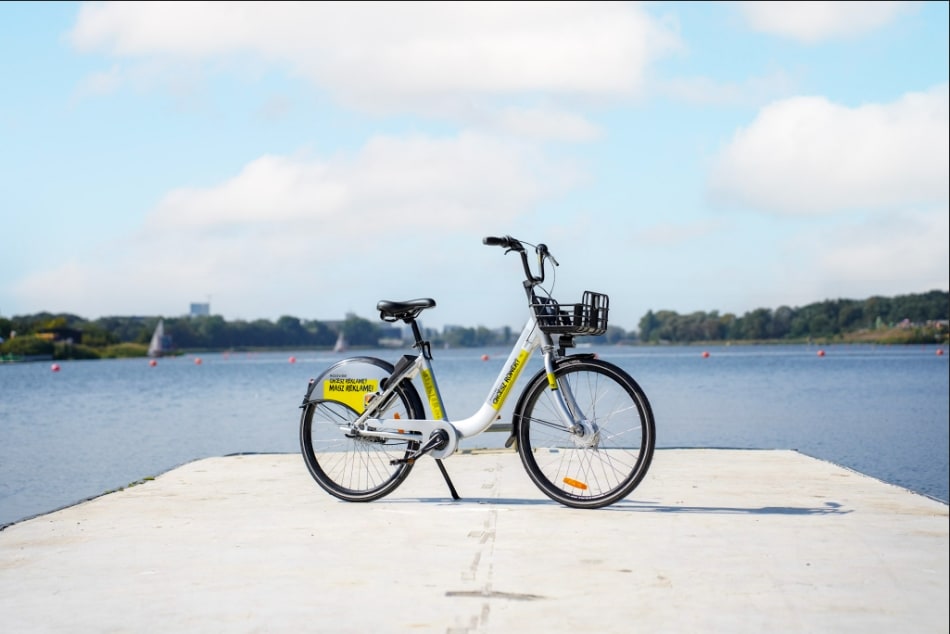
How to Launch a Campus Shared E-Bike Program: Budget, Bike Selection & Pilot Playbook (2026)
 Share on X
 LinkedIn
 Facebook
 Reddit
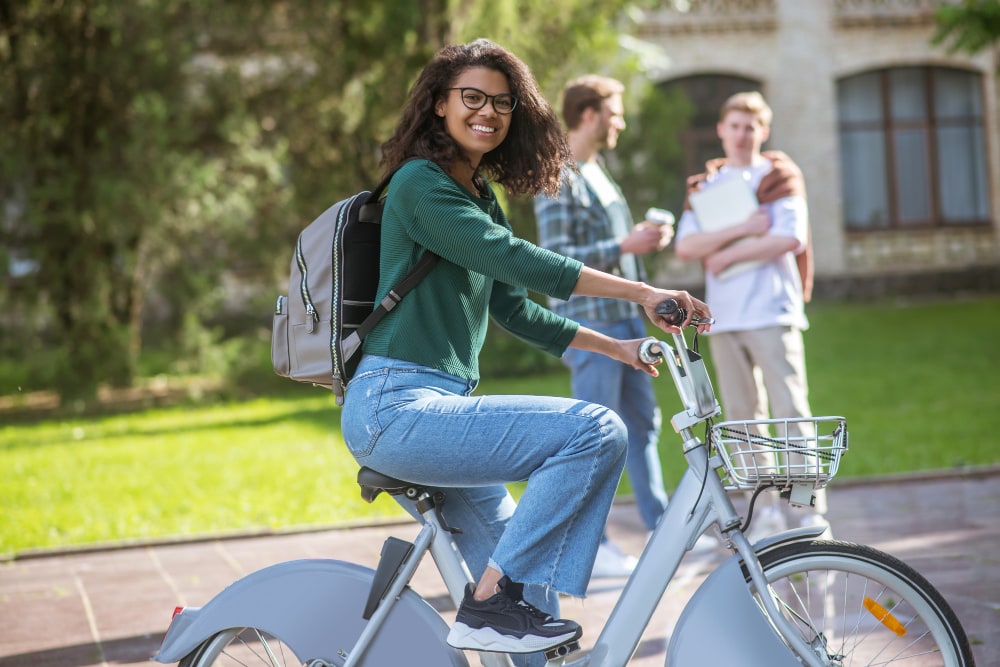
If you ask shared-mobility operators where electric bike sharing achieves the highest utilization with the lowest vandalism and theft rates, the answer is rarely an open city street. It is a university, corporate, research, or hospital campus.
A campus solves the three hardest problems of public micromobility before the first bike even touches the ground: the geography is bounded and easy to geofence, trips follow predictable daily waves between dormitories, lecture halls, laboratories, and transit stops, and the rider base is a closed or semi-closed community verified by student or employee ID. Yet every semester, promising campus bike-share initiatives stall in committee—or fail six months after launch—because planners buy consumer-grade bikes, underestimate pedestrian-zone parking friction, or trigger a veto from the campus fire marshal over indoor lithium-ion charging.
This guide is the end-to-end implementation playbook for university sustainability and transportation directors, campus facility managers, and regional micromobility operators bidding on campus RFPs. It covers the three pillars that determine whether a campus project succeeds: realistic budgeting (CAPEX, OPEX, and funding models), fleet-grade hardware and charging selection, and a step-by-step 90-day pilot workflow. For broader scenario comparisons, see our campus, hotel, city, and delivery scenario guide; for deep dives into energy infrastructure, read swappable batteries vs. station charging.
Executive Summary — The Campus Formula
1. Start with a 50–100 bike pilot: Anchor 4–6 high-traffic nodes (residence halls, main library/academic quad, STEM complex, peripheral parking lot, and nearest transit hub) rather than spreading bikes thinly everywhere. 2. Budget $95,000–$165,000 all-in for a 50-bike docked pilot (or $150,000–$280,000 for 100 bikes), including bikes, outdoor automated charging stations, IoT software, and a 5–8% spare-parts kit. 3. Spec for zero-drama operations: Step-through frames fitting 150–195 cm riders, puncture-proof non-inflatable tires, 99% internal cable routing, UL 2849 / EN 15194 certified electrical systems, and outdoor station charging so batteries never enter dormitories. 4. Run a 90-day semester pilot with clear KPI gates (4–7 rides/bike/day, >92% fleet uptime, >95% parking compliance) before scaling to 200+ units.
Part 1: Sizing the Campus Network & Choosing the Operating Model
Before requesting factory quotes, you need to translate your campus headcount and acreage into a concrete fleet size and parking architecture. Campus travel behaves differently from city commuting: instead of a two-hour morning rush and a two-hour evening rush, universities experience intense 15-minute surges every hour on the hour as classes let out, while corporate and hospital campuses peak around shift changes, lunch breaks, and inter-building meetings.
How Many Bikes Does a Campus Actually Need?
Across successful university and enterprise deployments, fleet sizing follows two practical ratios:
- Pilot phase (validation): 1 bike per 150–250 daily on-campus people, concentrated along a single primary corridor or core loop (minimum 30–50 bikes so riders reliably see an available bike at pilot hubs).
- Mature network (full rollout): 1 bike per 50–100 students or employees for residential universities and large car-free campuses, with a dock-to-bike ratio of 1.3 to 1.5 charging/parking slots per bike so riders never arrive at a full station when rushing to a lecture.
| Campus Type | Daily Population | Pilot Fleet | Full-Scale Fleet | Primary Trip Pattern |
|---|---|---|---|---|
| Small College / Corporate Park | 3,000 – 8,000 | 30 – 50 bikes (3–4 hubs) | 60 – 100 bikes (6–8 hubs) | 1–2.5 km building-to-building & parking shuttle replacement |
| Mid-Size University / Hospital District | 10,000 – 22,000 | 50 – 80 bikes (5–6 hubs) | 150 – 250 bikes (10–15 hubs) | Dorm-to-classroom surges, transit last-mile, night safety rides |
| Large Research University / Mega-Campus | 25,000 – 50,000+ | 80 – 120 bikes (6–8 hubs) | 300 – 600+ bikes (20+ hubs) | Multi-zone circulation, satellite campus connectors, town-gown corridors |
Docked vs. Semi-Docked vs. Free-Floating: Why Pure Dockless Fails on Campus
The single fastest way to get a shared mobility program banned by university administration is to deploy a pure free-floating fleet. Within two weeks, bikes are left blocking ADA wheelchair ramps, building fire exits, and landscaped quads. Campus groundskeepers start impounding bikes, and community goodwill evaporates.
Instead, successful campus programs choose between two controlled architectures:
- Architecture A: Automated Charging Stations (Docked — Recommended for 30 to 200 bikes). Bikes lock directly into modular wired or wireless charging racks at 4–12 designated hubs. Every time a student ends a ride at a dock, the bike automatically locks and begins charging—eliminating daily battery-swapping labor and guaranteeing parking order. See how this works in our automated charging station walkthrough.
- Architecture B: Hybrid Station + Virtual Geofenced Corrals (Recommended for 200+ bikes). High-volume hubs (dorms, transit stations, peripheral parking lots) use physical charging racks to supply 70–80% of fleet energy, while secondary academic buildings use painted, Bluetooth/RTK-verified virtual parking corrals with a small field team swapping batteries on high-turnover units.
Part 2: Complete Campus E-Bike Budget Model (CAPEX, OPEX & Funding)
Whether you are writing an internal capital budget proposal for the university board or pricing a turnkey operator bid, you need transparent numbers. Below is a realistic landed budget model for three common deployment tiers using factory-direct OEM hardware.
1. Upfront Capital Expenditure (CAPEX)
| CAPEX Line Item | 50-Bike Pilot (4 Charging Hubs) |
100-Bike Campus (7 Charging Hubs) |
250-Bike Network (14 Hubs / Hybrid) |
|---|---|---|---|
| Shared E-Bikes (Fleet-Grade + IoT Lock) | $45,000 – $65,000 | $88,000 – $125,000 | $210,000 – $300,000 |
| Charging Docks / Swap Cabinets (Hardware) | $18,000 – $30,000 | $32,000 – $55,000 | $75,000 – $120,000 |
| Ocean Freight, Duties & Port Delivery | $8,000 – $14,000 | $14,000 – $24,000 | $30,000 – $52,000 |
| Site Prep, Electrical Hookup & Signage | $8,000 – $16,000 | $14,000 – $28,000 | $30,000 – $60,000 |
| Software Setup, Branded App & SSO Integration | $4,000 – $8,000 | $5,000 – $10,000 | $8,000 – $15,000 |
| Spare Parts Pool (6% of bike value, shipped in container) | $3,000 – $4,000 | $5,500 – $7,500 | $13,000 – $18,000 |
| Total Estimated Turnkey CAPEX | $86,000 – $137,000 | $158,500 – $249,500 | $366,000 – $565,000 |
Why campus CAPEX beats municipal CAPEX: On a university or corporate campus, the land is privately owned and electrical conduit is usually available at adjacent buildings or lighting poles. That cuts civil permitting and trenching costs by 50–70% compared with public street installations. For container packing and tariff details, see our international e-bike shipping and customs guide.
2. Annual Operating Expenditure (OPEX)
For a 100-bike station-charged campus fleet running 9–10 active academic months per year, annual operating costs typically fall between $28,000 and $48,000 per year ($280–$480 per bike/year):
- SaaS platform, cloud hosting & 4G IoT SIM data: $3–$6 per bike/month ($3,600–$7,200/year for 100 bikes).
- Preventive maintenance & consumable parts (brake pads, grips, kickstands): $80–$140 per bike/year ($8,000–$14,000/year). Choosing non-inflatable foam tires and drum/roller brakes cuts this line by roughly 40%.
- Part-time campus mechanic / student operations assistants: 15–25 hours/week during the semester for safety checks, minor rebalancing, and cleaning ($10,000–$18,000/year—often staffed via university work-study programs).
- Electricity: A 36V 13Ah (468 Wh) battery charged 200 times a year uses roughly 100 kWh per bike—only $1,200–$2,500/year for an entire 100-bike fleet.
- Commercial general liability & fleet insurance: $5,000–$8,000/year depending on jurisdiction and rider waiver integration.
3. Three Proven Campus Funding & Revenue Models
Model 1: Campus-Funded Amenity (Shuttle & Parking Offset)
The university or enterprise funds CAPEX from its sustainability endowment, parking-permit revenue, or campus shuttle budget. Rides under 20 minutes are free for anyone logging in with a .edu or corporate SSO account; overage fees ($1.50 per 15 minutes) ensure bikes are returned promptly to docks rather than hoarded outside classrooms. Replacing just one diesel campus shuttle bus saves $60,000–$100,000 per year in driver wages and fuel—paying back a 100-bike e-bike system in under 24 months.
Model 2: Subsidized Semester Membership + Pay-Per-Ride
Students pay a low semester membership ($25–$45/semester or $69/academic year) for unlimited 30-minute rides, while visitors and casual riders pay $1 unlock + $0.20/minute. In a 15,000-student university where just 12% of students buy a semester pass, membership revenue alone generates $90,000–$125,000 per academic year—fully covering OPEX and amortizing hardware CAPEX within two years.
Model 3: Operator Concession + Campus Sponsorship
A regional micromobility operator finances and operates the fleet under an exclusive 3-to-5-year campus concession agreement, combining student ride revenue with local sponsor branding (campus credit union, telecom carrier, or regional healthcare network) on the frame downtubes, front baskets, and charging station totems.
Part 3: Hardware & System Selection (Why Retail E-Bikes Die in Month Two)
The most expensive mistake a campus committee can make is purchasing retail commuter e-bikes and bolting third-party smart locks onto them. Students ride in heavy rain, carry 15 kg backpacks in front baskets, hop curbs between classes, and leave bikes outdoors 24/7. A purpose-built shared e-bike differs from a consumer bike in six critical areas:
1. Puncture-Proof Non-Inflatable Tires
Flat tires account for up to 50% of field service calls in pneumatic bike-share fleets. On a campus with small maintenance teams, a flat bike sits dead in a rack for days. Specifying closed-cell foam or honeycomb non-inflatable tires eliminates puncture dispatches completely and removes weekly air-pressure checks. Read our engineering breakdown on how puncture-proof tires and light frames change fleet economics.
2. 99% Internal Cable Routing & Tamper-Proof Fasteners
Exposed brake wires, display cables, and motor harnesses get snagged on adjacent handlebars in crowded bike racks—or deliberately pulled by vandals. Specify a frame with internal routing through the handlebar and downtube, paired with proprietary security Torx/penta-lobe bolts on wheels, saddles, and baskets.
3. Drum / Roller Brakes vs. Disc Brakes
While hydraulic disc brakes are ideal for heavy cargo delivery bikes, thin disc rotors bend easily when bikes are bumped together in dense campus racks. For shared student fleets capped at 20–25 km/h, enclosed front drum brakes paired with rear electronic servo/roller brakes offer weather-sealed stopping power and go 5,000–8,000+ km between adjustments.
4. Universal Step-Through Ergonomics
Your fleet must comfortably fit a 152 cm freshman and a 193 cm graduate student without tools. Look for a low step-through alloy frame, an upright swept-back handlebar, and a heavy-duty quick-release seatpost with laser-etched height markers and an internal anti-removal steel cable.
5. Fire-Marshal Approval: UL 2849 / EN 15194 & Outdoor Charging
Since 2024, dozens of North American and European universities have banned personal e-bikes and e-scooters from residence halls due to unregulated battery fires. A sanctioned campus shared e-bike system actually improves campus fire safety—provided you present the fire marshal with two non-negotiable specs:
- Certified electrical architecture: Full UL 2849 (North America) or EN 15194 + CE + TÜV (Europe) certification with tier-one cells (Samsung, LG, CATL), smart BMS thermal cutoffs, and IPX7 waterproofing on battery packs.
- Zero indoor dorm charging: Because bikes charge outdoors at automated docking stations—or batteries are locked inside the frame with an electronic lock controllable only by staff—students never bring lithium-ion packs into dorm rooms.
Matching TXED Shared E-Bike Platforms to Your Campus
| TXED Model | Key Spec Highlights | Charging Compatibility | Best Campus Fit |
|---|---|---|---|
| E Bike2Share IV | 36V 250W hub motor, 36V 13Ah hidden tube battery (~70 km range), 26" non-inflatable tires, front drum + rear servo brake, full cable concealment | Wired / wireless docking station + electronic battery lock | Standard University & Corporate Fleet: Lowest maintenance, zero flats, clean enclosed silhouette |
| E Bike2Share VII | 36V 250W motor, 36V 13Ah battery (~70 km range), center phone holder with integrated display, high-rise comfort handlebar, IoT smart lock | Station charging + quick-release swappable battery option | Smart / Tech-Forward Campuses: Ideal where students navigate sprawling multi-zone campuses using phone maps |
| Commercial Grade Sharing E-Bike | 36V 350W motor, 36V 15Ah extended battery (~80 km range), reinforced heavy-duty frame, industrial-grade components | Swappable battery + station hybrid | Hilly Campuses & Town-Gown Networks: Extra torque and battery capacity for steeper gradients and 10+ rides/day |
Custom Campus Branding (OEM at 50-Unit MOQ)
Campus pride drives ridership and deters off-campus theft. A bike painted in official university Pantone/RAL colors with the school crest on the head tube and student-union branding on the basket is immediately recognizable across town. At TXED, custom OEM colors, decals, and pre-integrated IoT locks start at an MOQ of just 50 pcs per model/color, with samples ready in 3–4 weeks. See our White-Label vs. OEM guide for customization details.
Part 4: The 4-Phase Campus Pilot Playbook (From Concept to Rollout)
Never launch 300 bikes on day one. Even the best-planned campus network discovers after launch that one station needs to move 50 meters closer to a dining hall door or that a pedestrian bridge needs an automatic 12 km/h speed-limit zone. Follow this four-phase pilot sequence instead:
Phase 1: Stakeholder Alignment & Site Mapping (Weeks 1–3)
- Form the 5-seat working group: Bring together Parking & Transportation (project owner), Facilities & Grounds (station pads and power access), Campus Police & Fire Safety (speed rules and UL/EN battery documentation), Campus IT (SSO login or student card integration), and Student Government / Sustainability Office (rider advocacy and launch marketing).
- Map the "15-minute desire lines": Identify the 4 to 6 locations where walking takes 12–20 minutes and buses are overcrowded. Classic pilot anchors: (1) largest freshman dormitory cluster, (2) main library / student union, (3) engineering or science complex, (4) athletic center, and (5) perimeter commuter parking lot or rail station.
- Audit electrical power at each hub: Automated charging racks draw standard single-phase AC power (typically 1.5–3 kW for a 10-dock station—equivalent to one or two commercial vending machines). Confirm tapping points near exterior building walls or light poles.
Phase 2: Procurement, Geofencing & Policy Setup (Weeks 4–12)
- Lock in hardware spec and OEM branding: Order 1–2 evaluation samples if testing a new platform (3–4 weeks), then place the pilot production order (~60 days production + ocean freight).
- Configure the three geofence layers in the backend software:
- Outer service boundary: Motor assist cuts off smoothly and lock refuses ride termination if a bike leaves campus limits.
- Pedestrian slow zones (10–12 km/h): Central plazas, library walkways, and shared dining courtyards during daytime hours.
- Mandatory return corrals / docks: Ride billing only stops when the bike is physically docked in a charging rack or parked inside a designated Bluetooth/RTK beacon zone.
- Set the pricing and accountability rules: Require campus email or ID verification at signup, an in-app 60-second safety quiz (no sidewalk riding where prohibited, yield to pedestrians, park in docks only), and an automatic $5–$10 out-of-station fee vs. a $0.50 credit for returning a bike to a charging dock.
Phase 3: The 90-Day Live Semester Pilot (Weeks 13–25)
- Soft launch (Days 1–14): Invite 200–300 beta riders (student government, resident advisors, facilities staff) to ride for two weeks before the full campus announcement. Use these 14 days to fine-tune GPS geofence boundaries where tall concrete buildings cause signal drift.
- Orientation / Semester Kickoff Launch (Day 15): Host a tent at the main quad during Welcome Week or Earth Month. Have student ambassadors help new riders scan the QR code and complete their first dock/unlock cycle in 30 seconds.
- Weekly operations rhythm: Check the fleet dashboard each morning for low-battery alerts (typically <3% of bikes in a station-charged system), inspect tire wear and brake tension during bi-weekly station walk-throughs, and review heatmaps every Friday to spot stations that empty out at 9:00 AM or overflow at 1:00 PM.
Phase 4: KPI Gate Review & Phase 2 Expansion (Week 26)
At the end of the 90-day pilot, evaluate the program against these six industry benchmarks before approving Phase 2 expansion:
| Pilot KPI | Healthy Campus Target | What to Adjust If Below Target |
|---|---|---|
| Rides per Bike per Day (RBD) | 4.0 – 8.0+ rides/day (weekdays) | Relocate underperforming stations closer to building entrances; simplify pricing to semester pass |
| Fleet Availability (Charged & Rideable) | > 92% at 8:00 AM daily | Add charging docks at overnight dorm hubs or introduce midday battery swap for top 20% bikes |
| Parking Compliance Rate | > 96% in docks / corrals | Tighten geofence end-ride lock rules; add Bluetooth parking beacons and photo-verification |
| Maintenance Tickets per 1,000 Rides | < 8 tickets / 1,000 rides | Switch any pneumatic tires to non-inflatable foam; upgrade exposed cables to internal routing |
| Average Trip Duration & Distance | 6–12 mins / 1.2–2.8 km | If trips exceed 30 mins, lower the free-ride window to 20 mins to increase bike turnover |
| Rider Satisfaction (NPS / Survey) | > 80% positive | Address dock-full friction at peak hours by adding 3–5 overflow parking slots per popular hub |
Part 5: Five Common Pitfalls That Derail Campus Projects
1. Spreading 50 pilot bikes across 20 tiny locations.
Two bikes per building means a student walking out of class has a 50% chance of finding zero bikes—so they stop checking the app. Concentrate your 50 pilot bikes across 4 or 5 high-visibility hubs (10–12 bikes each) so availability feels guaranteed on your core corridor, then add hubs as the fleet grows.
2. Forgetting winter and summer break battery storage protocol.
Universities empty out for 4–6 weeks in winter and 2–3 months in summer. Leaving lithium-ion batteries at 0% or 100% charge in freezing or 40°C weather permanently degrades capacity. Store idle batteries at 50–60% state of charge (SoC) in a dry indoor maintenance bay, or leave docked bikes on smart charging stations with storage-maintenance firmware enabled. Read our extreme-weather shared e-bike engineering guide for seasonal checklist details.
3. Ignoring the front basket specification.
Students never ride empty-handed—they carry laptops, lab gear, gym bags, and groceries. A thin wire basket bolted to the front fork causes dangerous steering wobble under a 12 kg backpack and snaps off within weeks. Specify a frame-mounted or heavy-gauge welded aluminum basket with a drain-friendly base and no sharp edges.
4. Shipping the first container without a spare-parts kit.
Waiting 10 days for international air freight when a bike needs a replacement display, kickstand, or brake lever kills pilot momentum. Always bundle a 5–8% spare-parts package (controllers, IoT modules, displays, brake assemblies, pedals, saddles, and chargers) inside your initial container at zero extra ocean-freight cost.
5. Treating software and hardware as separate procurements that don't talk.
Buying bikes from one vendor, charging docks from a second, and an IoT lock/app platform from a third turns your pilot team into an unpaid systems integrator. Source a factory-integrated system where the bike's BMS, smart lock, charging dock communication, and fleet management API are tested together on the assembly line before shipment.
Frequently Asked Questions
What is the minimum fleet size for a campus shared e-bike pilot?
Operationally, 30 to 50 e-bikes across 3 to 5 hubs is the minimum viable pilot size for a university or corporate campus. Fewer than 30 bikes creates "empty station anxiety" during class changes, skewing ridership data downward. From a manufacturing standpoint, TXED's OEM minimum order quantity is 50 pcs per model/color, making a 50-to-60-bike custom-branded campus pilot fit neatly into a single shipment alongside charging racks and spare parts.
How long does it take to launch a campus e-bike project from approval to first ride?
Plan for 14 to 18 weeks total: 3–4 weeks for sample approval and campus color/branding sign-off, ~60 days for mass production of the bikes and charging stations, and 4–6 weeks for ocean freight and customs clearance. While the container is on the water, your campus facilities team completes the electrical drops, station pad mounting, and software geofence setup so bikes can launch within days of arrival. (To hit a September Fall Semester launch, finalize specs in March or April.)
Should a university choose wired charging stations, wireless charging pads, or battery swapping?
For most campuses with 30–200 bikes, wired or wireless automated charging stations win decisively because students return bikes to predictable hubs and charging happens automatically with zero daily staff labor. Choose wireless inductive charging in coastal, snowy, or prestigious architectural zones where exposed metal contacts or visual clutter are undesirable. Add swappable batteries only when scaling past 200+ bikes across satellite zones without grid power.
How do we prevent off-campus theft and vandalism?
Campus fleets combine four layers of defense: (1) Closed-loop user authentication requiring a verified student/staff ID or credit card deposit; (2) 4G GPS + BLE IoT smart locks that sound an alarm, lock the rear wheel, and disable motor power if a bike crosses the campus geofence; (3) Physical dock locking at charging stations overnight; and (4) Distinctive OEM school colors and proprietary fasteners that make the bike impossible to resell on the consumer market and unusable with standard consumer chargers.
Planning a Campus Shared E-Bike Pilot or RFP?
TXED manufactures turnkey shared e-bike fleets, automated wired and wireless charging stations, and IoT-integrated hardware for universities, corporate parks, and micromobility operators across 30+ countries. All systems ship with EN 15194 / CE / TÜV (Europe) or UL 2849 (North America) certification and custom campus OEM branding starting from 50 units. Explore TXED shared e-bike systems → | Request a campus pilot budget & sample quote →