Swappable Batteries vs Station Charging: Which Model Wins for Your Shared E-Bike Fleet?
 Share on X
 LinkedIn
 Facebook
 Reddit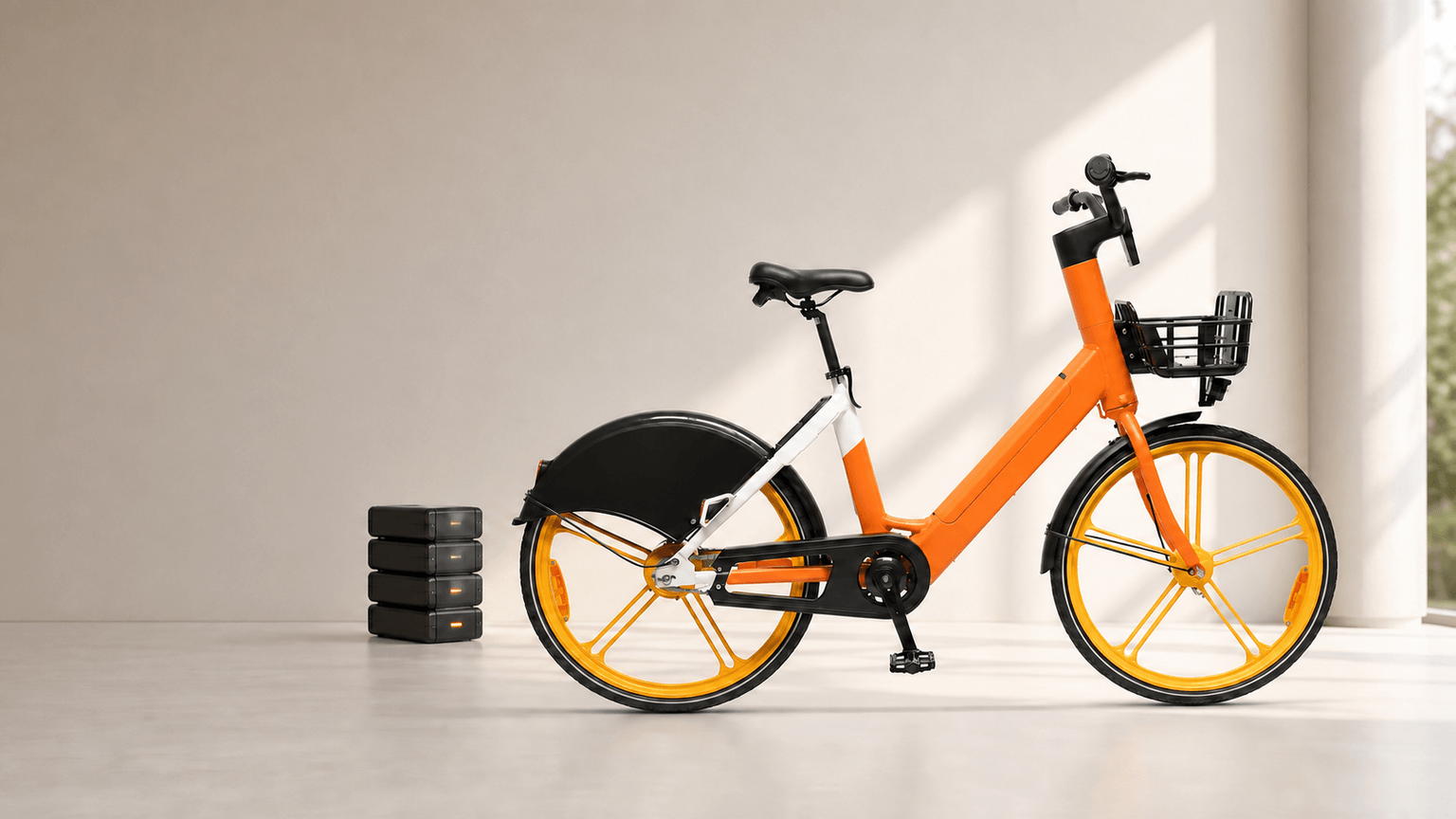
Ask any shared e-bike operator what keeps them up at night, and charging logistics will be near the top of the list. How you keep 500 or 5,000 bikes powered shapes your capital expenditure, daily operating costs, fleet uptime, and even which cities will grant you a permit to operate.
Two dominant charging models have emerged in the shared micromobility industry: station charging, where bikes dock into fixed racks that deliver power, and swappable batteries, where staff swap depleted packs for charged ones in the field. Each model has vocal advocates—and each carries hidden costs that don't show up on a spec sheet.
This article breaks down both approaches across the dimensions that actually matter to fleet operators: upfront infrastructure cost, ongoing labor and logistics, fleet availability, scalability, and suitability for different deployment scenarios. The goal is not to declare a universal winner—because there isn't one—but to give you a decision framework for your specific market.
The Two Charging Models, Explained
Before comparing costs and trade-offs, it's worth being precise about what each model actually involves operationally.
Station Charging: Bikes Come to the Power
In a station-charged system, each bike returns to a fixed docking point that doubles as a charging rack. The bike's battery charges in place—no removal required. The rider returns the bike to a dock, the dock verifies the connection, and charging begins automatically.
There are two sub-variants:
- Wired (contact-based) charging: Metal contacts on the bike engage with contacts on the dock. Proven, cost-effective, and widely deployed. The main failure point is physical—contacts corrode, bend, or fill with debris.
- Wireless (inductive) charging: The bike docks onto a pad that transfers power via magnetic induction. No exposed contacts means better weather resistance and lower maintenance, but higher upfront cost per dock.
In both cases, the bike must be physically present at a station to charge. This creates a hard dependency between rider behavior, station density, and fleet availability.
Swappable Batteries: Power Comes to the Bikes
In a swappable-battery system, the battery pack is designed to be removed and replaced in the field by operations staff—typically in under 60 seconds. Depleted batteries are collected and taken to a central charging hub, where they charge in batches and are redistributed to the field the next day.
This model decouples charging from the bike's location. A bike can be parked anywhere—dockless, at a virtual station, or free-floating—and still be "recharged" by a field operator who arrives with a fresh battery in a van or cargo bike.
The operational implication is significant: bikes never need to return to a fixed point to charge. The station becomes optional for parking order, but not for energy supply.
CAPEX: Upfront Infrastructure Cost
The capital expenditure profiles of the two models are structurally different. Station charging front-loads cost into ground infrastructure; swappable batteries front-load cost into battery inventory and transport vehicles. The right way to compare them is not in absolute figures—those depend entirely on your market, fleet size, and local construction costs—but in which cost categories each model forces you to invest in.
Station Charging CAPEX Drivers
- Charging racks/docks: Per-dock cost scales with features—wired contacts are the most economical; wireless inductive pads add a premium for weatherproofing and lower maintenance; smart features (status monitoring, payment integration) add further.
- Civil works: Permits, concrete pads, electrical trenching, and grid connection. This is the most variable line item—a station in a developed urban plaza costs far more than one on a campus you already own.
- Grid upgrade: High-density stations may require transformer upgrades or additional phase capacity. Often the hidden cost that blows station budgets.
- Battery count: One battery per bike. No spares needed—this is a structural CAPEX advantage.
Swappable Battery CAPEX Drivers
- Extra battery packs: You need a battery rotation pool. Typically 1.5–2.0 batteries per bike: one in the bike, 0.5–1.0 charging or in transit. For large fleets, this is the single biggest CAPEX line.
- Central charging hub: A warehouse or container with shelved charging racks, fire suppression, and climate control. Scales with fleet size but shared across all bikes.
- Swap vehicles: Cargo vans, electric cargo bikes, or trailers designed to carry 20–40 batteries per route. Number of vehicles scales with fleet size and route density.
- No ground infrastructure: Zero civil works, no permits for stations, no grid upgrades. This is the model's biggest CAPEX advantage—and it's the reason swap models typically launch with meaningfully lower upfront investment.
The key takeaway is not a specific number but a structural difference: station charging concentrates CAPEX in ground infrastructure that is sunk and location-specific; swappable batteries spread CAPEX across movable assets (batteries, vehicles, hub equipment) that can be redeployed or relocated as your operation evolves. For operators who already control land (campuses, resorts), the ground infrastructure cost is incremental. For operators entering new cities with no land rights, avoiding ground infrastructure is a major strategic advantage.
OPEX: The Hidden Cost of Swapping Labor
The CAPEX advantage of swappable batteries comes with a structural OPEX burden: you are now running a daily logistics operation to move batteries between the field and your charging hub. Whether this trade-off makes sense depends heavily on your local labor rates and fleet utilization.
Station Charging OPEX
- Electricity: Per-charge energy cost is modest and predictable. Charging happens off-peak overnight in most deployments, tapping lower tariffs.
- Rebalancing: Bikes need to be moved to stations, but since stations are also charging points, rebalancing and charging happen in the same trip. Labor is shared—no separate energy-resupply route.
- Station maintenance: Contact cleaning, connector replacement, occasional electrical repairs. Scales with station count, not bike count.
- Low swap labor: No daily battery-handling route required. Field staff focus on bike repairs and rebalancing—two tasks instead of three.
Swappable Battery OPEX
- Electricity: Same per-kWh cost, but centralized charging can be scheduled for off-peak hours, reducing energy cost by 15–30%.
- Swap route labor: This is the dominant OPEX line. A two-person swap team can service 80–120 bikes per shift. For a 500-bike fleet, that's 4–6 staff per day. In high-wage markets, this single line item can exceed all other OPEX combined.
- Vehicle fuel/maintenance: Swap vans run 6–10 hours daily. Fuel, maintenance, and depreciation add a significant per-vehicle annual cost.
- Battery handling losses: Batteries get dropped, exposed to rain during swaps, or mismatched. Expect 2–4% annual battery loss from handling damage—batteries that simply vanish from your inventory.
- Charging hub overhead: Rent, fire insurance (lithium battery storage carries higher premiums), climate control for the charging warehouse.
"The swap model trades capital for labor. In markets where field labor is expensive—Western Europe, Nordics, Australia—the OPEX of swap routes can erase the CAPEX savings within 18–24 months. In markets where labor is more affordable—Southeast Asia, Latin America—the swap model often maintains a clear cost advantage."
This is the single most important variable in the decision: your local labor cost relative to your local infrastructure cost. A swap model that is economically attractive in Hanoi may be unworkable in Amsterdam. Run the comparison with your actual local numbers before committing.
Fleet Uptime: The Availability Question
Fleet availability—the percentage of your bikes that are charged, functional, and available for riders at any given time—is the metric that most directly correlates with revenue. Here, the two models diverge sharply based on fleet utilization.
When Station Charging Wins on Uptime
In moderate-utilization deployments (campuses, hotels, resorts, small communities), most bikes return to stations naturally at the end of the day. Riders park, the dock charges, and by morning the fleet is at 100%. There is no swap route to organize, no battery logistics to manage. Availability is consistently 90–95%+ with minimal intervention.
The failure mode is station saturation: if a station is full, riders can't park—and a bike that can't park can't charge. This is solved by adequate station density and overnight rebalancing, which is far less labor-intensive than daily battery swapping.
When Swappable Batteries Win on Uptime
In high-utilization, dockless urban deployments, bikes are scattered across a city. Forcing riders to return bikes to charging stations creates friction that kills adoption. Swappable batteries allow the fleet to stay free-floating while field staff handle energy resupply independently of rider behavior.
The uptime advantage is most pronounced during peak demand periods. A station-charged bike that runs out of battery at 2 PM is offline until a rider returns it to a dock or until rebalancing staff move it. A swappable-battery bike that runs out at 2 PM can be back in service in under an hour once a swap van reaches it.
For dense urban operations running 15+ rides per bike per day, the swap model typically achieves 5–10 percentage points higher availability during peak hours.
Scenario Analysis: Which Model Fits Your Deployment
The right charging model depends primarily on three factors: fleet utilization rate, deployment density (dockless vs docked), and local labor cost. Here's how the models map to common deployment scenarios:
Campus / Corporate Park (50–200 bikes)
Recommended: Station charging (wired racks)
- Low utilization (5–8 rides/bike/day) means batteries last a full day on a single charge.
- Bikes naturally cluster at a few buildings—stations at those locations capture nearly all bikes.
- No need for daily swap routes. A single part-time technician handles maintenance.
- Stations also enforce orderly parking, which campus facility managers require.
Hotel / Resort (20–80 bikes)
Recommended: Station charging (wireless preferred)
- Guests expect a premium experience; they won't hunt for a charged bike. Stations guarantee availability at pickup points (lobby, beach, pool).
- Wireless charging eliminates connector corrosion in coastal/salt-air environments.
- Small fleet size makes swap route overhead disproportionate—a van for 50 bikes is wasteful.
- Stations double as branded parking, reinforcing the resort's visual identity.
Urban Dockless Sharing (500+ bikes)
Recommended: Swappable batteries
- High utilization (10–20 rides/bike/day) means batteries deplete mid-day during peak demand.
- Free-floating bikes are scattered across the city; requiring station returns would kill adoption.
- Swap routes can be optimized by AI demand prediction—send vans to high-demand zones first.
- No ground infrastructure means faster launch and easier permit compliance (many cities restrict dock stations).
City-Wide Docked System (1,000+ bikes)
Recommended: Station charging (wired, high-density docks)
- Large docked systems (like Vélib' in Paris or Call-a-Bike in Berlin) were designed around station charging from day one.
- Station density is high enough that riders always find a dock within 200–300 meters.
- Rebalancing and charging happen simultaneously when staff move bikes between stations.
- The scale makes swap routes prohibitively expensive: 1,000 bikes = 8–12 swap vehicles.
Delivery Fleet (50–200 bikes)
Recommended: Swappable batteries (at hub) or dual-battery systems
- Delivery riders can't afford 4–5 hour charging downtime mid-shift. Swaps at the dispatch hub take 60 seconds.
- Bikes return to the hub between routes anyway, so swap logistics are centralized—no city-wide van routes needed.
- Alternatively, dual-battery systems extend range to cover a full shift without any swap or charge stop.
The European Context: Regulation Is Reshaping the Calculus
European operators face two regulatory pressures that influence the charging model decision:
1. Dock-free permit preferences. Cities including Amsterdam, Paris, and Barcelona have moved to limit or eliminate fixed dock infrastructure in city centers, citing sidewalk obstruction and visual clutter. For operators targeting these markets, swappable batteries are increasingly not a choice but a permit requirement—free-floating bikes require field-charging.
2. EU Battery Regulation (EU 2023/1542). The new regulation introduces battery passports, extended producer responsibility (EPR), and recycling quotas. Swappable battery systems centralize battery handling, making it far easier to track battery health, execute recalls, and manage end-of-life recycling. Station-charged batteries are distributed across hundreds of docks, making compliance documentation more complex. For operators prioritizing ESG reporting—and the investors increasingly demanding it—the centralized battery management of swap systems is a compliance advantage. We covered the specifics of the regulation in our EU e-bike regulations guide.
3. Fire safety standards. Centralized charging hubs must comply with local fire codes for lithium battery storage, which in some European cities require dedicated ventilation, fire suppression systems, and minimum distances from residential buildings. This adds a meaningful premium to hub setup costs depending on jurisdiction—and is a line item that station-charged fleets simply don't have.
Side-by-Side Comparison
| Dimension | Station Charging | Swappable Batteries |
|---|---|---|
| Upfront CAPEX | Higher (ground infrastructure) | Lower (no ground infrastructure) |
| Daily OPEX | Lower (minimal labor) | Higher (swap route labor) |
| Fleet availability (low util) | 90–95%+ | 85–92% |
| Fleet availability (high util) | 75–85% | 88–95% |
| Deployment speed | Slow (permit + civil works) | Fast (launch in days) |
| Parking order | High (docks enforce structure) | Low (requires virtual stations) |
| EU battery compliance | Harder (distributed batteries) | Easier (centralized management) |
| Scalability | Capital-intensive per station | Labor-intensive per bike |
| Best for | Campus, hotel, docked city | Dockless urban, delivery |
TXED's Dual-Mode Approach: Both Options, One Platform
TXED's sharing e-bike platform supports both charging models on the same hardware base. The battery pack is designed for in-bike charging via docking racks and for field-swapping via a quick-release mechanism that takes under 60 seconds to operate.
This means operators don't have to commit to one model at launch. A common deployment pattern we see among our partners:
- Phase 1 (pilot, 50–100 bikes): Launch with station charging at a few key locations. Low CAPEX, fast deployment, proves ridership demand.
- Phase 2 (growth, 200–500 bikes): Add swappable battery operations for the dockless portion of the fleet as coverage area expands beyond station walking distance.
- Phase 3 (scale, 500+ bikes): Hybrid model—stations in high-density zones (transit hubs, city centers), swappable batteries for free-floating coverage in peripheral areas.
This phased approach lets operators match their charging infrastructure investment to actual revenue growth, rather than over-investing in ground infrastructure before ridership is proven—or committing to swap route labor costs before utilization justifies it.
Decision Framework: 5 Questions to Ask
If you're evaluating which charging model to adopt, work through these five questions in order:
- What is your expected utilization rate? Below 8 rides/bike/day, station charging will keep the fleet powered with minimal labor. Above 10 rides/bike/day, you'll need swap capability to maintain availability during peak hours.
- Is dockless deployment required by your city permit? If yes, swappable batteries are likely your only viable option. Check local regulations early.
- What is your local field labor cost relative to infrastructure cost? In high-wage markets (Western Europe, Nordics), swap route labor is a major OPEX line that can erase CAPEX savings within 18–24 months. In lower-wage markets (Southeast Asia, Latin America), the swap model often maintains a clear cost advantage. Run the math for your market.
- How fast do you need to launch? Station charging requires 2–6 months for permits and civil works. Swappable batteries can launch in 1–2 weeks. If speed-to-market is strategic, start with swaps, add stations later.
- Will you need to scale to multiple cities? Swappable battery operations are more portable—you can replicate the model in a new city with just a charging hub and swap vehicles. Station systems require fresh permits and civil works in every city.
Scenario Recommendation Summary
Here's a quick-reference guide matching deployment scenarios to the recommended charging model, with the key reason for each:
| Deployment Scenario | Fleet Size | Recommended Model | Key Reason |
|---|---|---|---|
| Campus / Corporate Park | 50–200 | Station charging (wired) | Low utilization + centralized parking = minimal labor |
| Hotel / Resort | 20–80 | Station charging (wireless) | Guaranteed availability at pickup points; premium experience |
| Urban Dockless Sharing | 500+ | Swappable batteries | High utilization + free-floating = swap maintains peak uptime |
| City-Wide Docked System | 1,000+ | Station charging (high-density docks) | Dense station network + scale makes swap routes uneconomical |
| Delivery Fleet | 50–200 | Swappable (at hub) or dual-battery | No mid-shift downtime; swaps take 60 seconds at dispatch hub |
| Residential Community | 30–100 | Station charging (wired) | Bikes return home daily; stations enforce orderly parking |
| Tourist / Coastal Town | 100–300 | Hybrid (seasonal swap, off-season station) | Peak season needs swap for surge; off-season stations suffice |
| Multi-City Expansion | Varies | Swappable batteries | No per-city civil works; replicate with hub + vehicles |
The Bottom Line
Neither charging model is universally superior. Station charging wins on OPEX and parking order in moderate-utilization, location-based deployments—campuses, resorts, and docked city systems. Swappable batteries win on CAPEX, deployment speed, and fleet availability in high-utilization, dockless urban environments.
The most successful operators we work with don't treat it as an either-or decision. They start with the model that fits their Phase 1 reality, then evolve toward a hybrid approach as the fleet scales and usage patterns become clear. TXED's dual-mode platform is designed precisely for this evolution—no need to replace your fleet when you outgrow your initial charging strategy.
Want to discuss which charging model fits your deployment scenario? Get in touch—we'll walk you through the cost model for your specific market, fleet size, and utilization targets, and help you build a charging strategy that scales with your business.