Mid-Drive vs. Hub Motor for Commercial Cargo & Delivery E-Bikes: The 2026 Fleet Buyer Guide
 Share on X
 LinkedIn
 Facebook
 Reddit
 Email
Email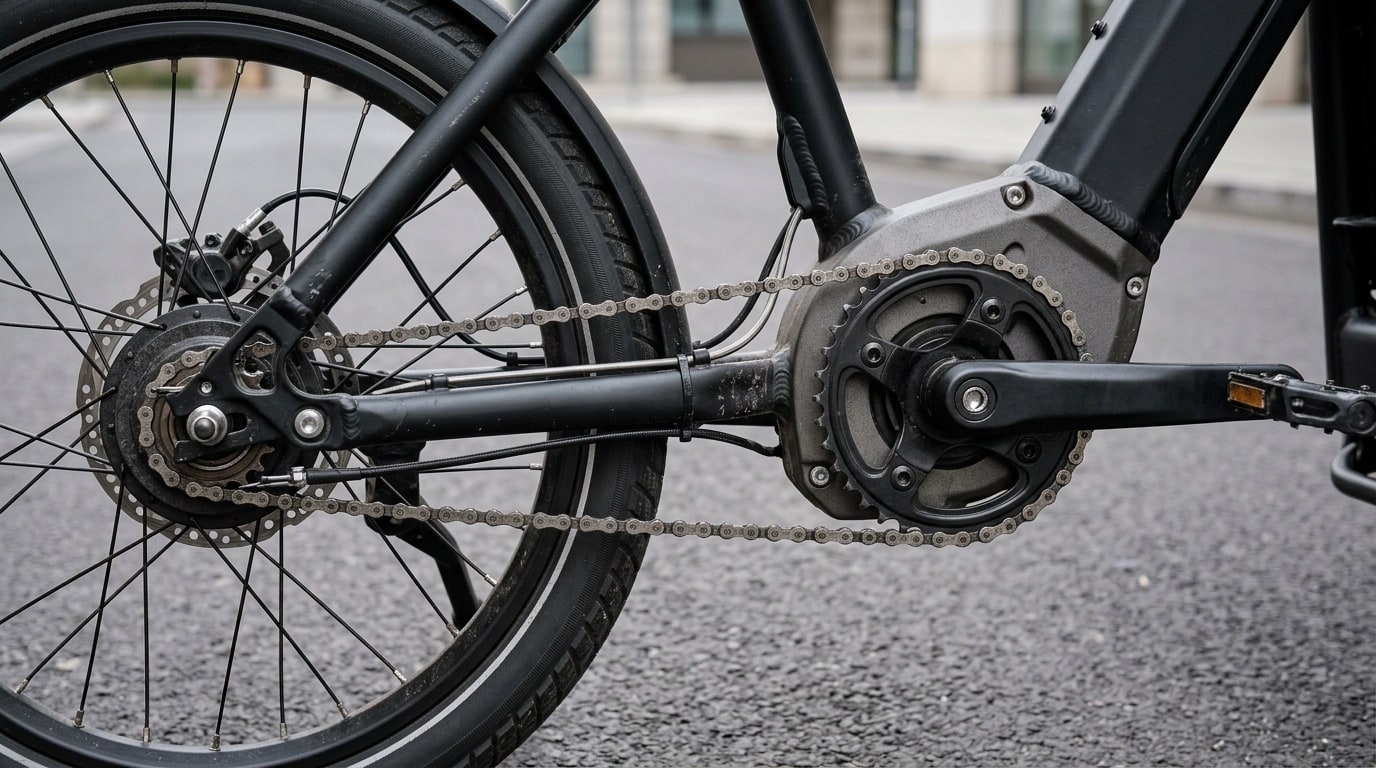
In consumer e-bike discussions, the choice between a mid-drive and a hub motor is often framed as a subjective question of "pedal feel," natural cadence, or stealth aesthetics. In commercial last-mile delivery and cargo logistics, however, the motor architecture dictates your depot maintenance schedule, roadside downtime, and multi-year Total Cost of Ownership (TCO).
When a delivery courier carries 100 kg of groceries or parcels up a 7% bridge ramp across an 8-hour shift, an electric drive system faces mechanical stresses that consumer e-bikes never encounter. A motor that shines on flat weekend commuter paths can trigger frequent thermal shutdowns, snapped chains, and blown phase wires under commercial duty cycles. Conversely, over-engineering every vehicle with a premium mid-drive can inflate fleet capital expenditure by 35% without delivering operational ROI on flat city routes.
This guide is written for fleet managers, logistics operations directors, and OEM/ODM procurement teams evaluating vehicles for delivery, postal, and commercial cargo fleets in 2026. For related fleet procurement guidance, see our companion analyses on how to choose a delivery e-bike for your fleet, the cargo e-bike vs. van vs. e-moped TCO breakdown, and navigating UL 2849 and EN 15194 compliance.
Executive Takeaway for Fleet Buyers
For commercial fleets operating with gross vehicle weights (GVW) exceeding 200 kg or in hilly topographies (>5% sustained gradients), mid-drive motors (85–120 Nm) are mandatory to avoid motor thermal throttling. However, mid-drives must be paired with commercial-grade internal gear hubs or belt drives to prevent chain failure every 1,000 km. For flat urban centers (e.g., London, Berlin, Amsterdam) with courier payloads under 80 kg, heavy-duty geared rear hub motors (55–80 Nm) provide the lowest initial CAPEX, completely isolate motor torque from the chain, and minimize drivetrain service hours.
1. The Core Physics: Gearing Multipliers vs. Thermal Saturation
To understand why electric motors fail in commercial cargo operations, one must look at the relationship between motor RPM, electrical efficiency, and heat dissipation. Electric motors generate maximum mechanical efficiency (typically 80% to 88%) when their internal rotor spins within an optimal RPM band. When an electric motor is forced to rotate slowly under high load, its efficiency plummets below 50%, and the unused electrical current is converted directly into heat ($I^2R$ resistive heating in the copper stator windings).
The Mid-Drive Mechanical Advantage
A mid-drive motor sits at the bottom bracket and transfers its power through the front chainring, utilizing the bicycle's mechanical transmission (derailleur cassette or internal gear hub). When a heavily loaded cargo bike approaches a steep hill, the rider (or automatic transmission) downshifts into a lower gear. This reduces the vehicle's ground speed while allowing the motor's internal rotor to continue spinning at high cadence (70–90 RPM at the crank, thousands of RPM inside the motor gearbox). As a result, the mid-drive maintains peak efficiency, keeps operating temperatures low, and multiplies output torque at the rear wheel:
With an 85 Nm mid-drive paired with a 38T front chainring and a 42T climbing sprocket, the effective torque delivered to the rear axle exceeds 93 Nm, providing immense climbing leverage without overloading the electrical system.
The Hub Motor Direct-Drive Reality
In contrast, a hub motor is built directly into the wheel hub. Its rotational speed is locked 1:1 to the wheel's rotation. On a 20-inch cargo wheel traveling at 8 km/h up a steep gradient, the hub motor turns at only 84 RPM. At this low RPM, the motor cannot leverage mechanical gears. To generate the torque demanded to push a 220 kg gross load, the motor controller pumps maximum amperage through the phase wires.
Without high-speed airflow or mechanical leverage, the stator coils heat up rapidly. Advanced controllers will trigger thermal throttling to prevent burnout, suddenly cutting motor assistance to 30%–50% halfway up the hill. Uncertified or low-grade hub motors can experience demagnetization of neodymium magnets or phase-wire insulation melting—a common failure mode noted in micro-mobility fleet studies published by the CityChangerCargoBike European Union research initiative.
2. Technical Comparison: Commercial Mid-Drive vs. Hub Motors
| Engineering Dimension | Commercial Mid-Drive (e.g., Bosch Cargo / Bafang M-Series) | Heavy-Duty Geared Hub Motor (e.g., Bafang H-Series) | Direct-Drive (Gearless) Hub Motor |
|---|---|---|---|
| Rated Torque Output | 85 – 120+ Nm (Multiplied by gears) | 50 – 80 Nm (Fixed at axle) | 40 – 60 Nm (Fixed at axle) |
| Climbing on >6% Gradient (200kg GVW) | Excellent (Maintains thermal efficiency) | Moderate (Risk of thermal derating on long climbs) | Poor (Stalls or overheats rapidly) |
| Drivetrain Stress (Chain/Cogs) | High (Combines rider + motor power) | Zero (Motor drives wheel directly) | Zero (Motor drives wheel directly) |
| Rear Wheel Removal & Tube Change | Fast (3–5 mins, standard thru-axle) | Slow (15–25 mins, cable disconnect, torque arms) | Slow (15–25 mins, 6kg+ motor weight) |
| Limp-Home Redundancy | Broken chain halts vehicle completely | High (Can throttle/assist even if chain breaks) | High (Direct drive backup) |
| Center of Gravity & Handling | Optimal (Low, centered between axles) | Rear-biased (Unsprung mass in wheel) | Very rear-heavy (5.5–7 kg motor mass) |
| Regenerative Braking | No (Freewheel isolates motor) | No (Internal clutch disengages) | Yes (Recovers 5–10% energy, saves brake pads) |
| Initial Hardware CAPEX Delta | Baseline + $350–$600 per unit | Lowest initial cost (Standard frame interface) | Moderate |
3. The Drivetrain Dilemma: The Hidden TCO in Mid-Drives
While mid-drives win decisively on climbing authority and thermal management, they introduce the single largest consumable maintenance liability in high-mileage fleets: accelerated drivetrain wear.
In standard cycling, a derailleur chain endures only human pedaling effort (100W–250W). In a commercial mid-drive cargo bike:
- The chain must transmit both the courier's muscular input and the motor's mechanical torque (often peaking over 600W electrical input).
- Delivery couriers under tight shift deadlines frequently shift gears under full motor power while accelerating from standstill at traffic lights.
- Street grit, winter road salt, and lack of shift lubrication cause traditional 9- or 10-speed bicycle chains to stretch beyond 0.75% wear in as little as 800 to 1,200 km.
A stretched chain rapidly erodes cassette teeth (especially the small 11T and 13T cogs). When skipped teeth occur, couriers lose propulsion, resulting in missed delivery windows and emergency workshop tickets.
How Commercial Operators Solve Mid-Drive Wear
To prevent bi-weekly chain replacements on mid-drive fleets, tier-1 operators specify two mandatory hardware upgrades:
- Gates Carbon Drive CDX Belt System: Polyurethane belts reinforced with carbon fiber tensile cords eliminate stretching, require zero chain lube, and withstand 15,000 to 20,000 km of commercial service, as detailed in technical specifications from Gates Industrial Corporation.
- Heavy-Duty Stepless or Internal Gear Hubs (IGH): Pairing mid-drives with sealed planetary hubs like the Enviolo Heavy Duty / Extreme series (rated up to 500 kg GVW) or Shimano Nexus 5E e-bike-specific hubs ensures gears can be changed at a complete standstill without damaging internal pawls.
4. The Roadside Maintenance Reality: The Hub Motor's Flat Tire Penalty
Where hub motors shine in drivetrain peace of mind, they exact a heavy operational penalty during roadside punctures. In dense metropolitan areas, delivery bikes experience a flat tire approximately every 1,500 to 2,500 km due to street glass, metal shards, and curb impacts.
Consider the difference in workshop and roadside mechanics:
- Mid-Drive Rear Wheel Service (4–6 Minutes): The rear wheel contains no wiring or motor hardware. A mobile mechanic or trained courier unlatches the thru-axle or quick-release skewer, drops the wheel, replaces the inner tube, and reseats the chain in minutes.
- Rear Hub Motor Wheel Service (18–25 Minutes): The technician must snip zip-ties along the chainstay, uncouple the heavy-gauge waterproof phase-wire connector, unbolt anti-rotation torque washers using an 18mm or 19mm box wrench, disengage the derailleur tensioner, and lift a 4.5 kg unsprung motor wheel. Reinstallation requires precise torque wrench tightening (often 35–45 Nm) to ensure torque washers sit flush in frame dropouts, preventing axle spin-out.
For a fleet of 100 delivery bikes encountering an average of 15 punctures per week across the fleet, the hub motor flat-tire penalty represents over 4.5 hours of additional mechanic labor each week, along with extended courier shift delays.
Fleet Spec Tip for Hub-Driven Fleets
If specifying hub-motor delivery bikes, always mandate puncture protection level 7 tires (such as Schwalbe Marathon E-Plus with 5mm SmartGuard) paired with closed-cell foam tire inserts (e.g., Tannus Armour) or liquid sealant. Preventing 90% of punctures at the spec sheet stage neutralizes the hub motor's primary operational weakness.
5. Weight Distribution, Handling Dynamics, and Rider Retention
Rider fatigue and vehicle handling directly influence accident rates and courier turnover. Commercial cargo bikes operate at high gross weights, making center of gravity (CoG) a critical safety metric.
A mid-drive motor places its 3.2–4.5 kg weight at the lowest point of the frame, centered between the front and rear wheels. This low, centralized mass keeps the cargo bike balanced when leaning into turns, navigating traffic circles, or mounting curbs. The rear wheel remains light, allowing rear suspension systems (if equipped) to react quickly to road imperfections.
A rear hub motor places concentrated unsprung mass directly on the rear axle. When carrying cargo over cobblestones, speed bumps, or potholes, the heavy motor exerts severe dynamic shock loads on the rear rim and spokes. Broken rear spokes and flat-spotted rims are significantly more prevalent on hub-driven cargo bikes unless the wheel is hand-laced with 12- or 13-gauge stainless steel spokes and double-walled heavy-duty cargo rims.
6. Regulatory Compliance & European Standards (DIN 79010 & EN 15194)
When importing commercial cargo vehicles into Europe or the UK, fleet managers must ensure motors comply with road-legal limits to avoid vehicle reclassification as mopeds (L1e-B):
- Continuous Rated Power (250W Limit): Under EN 15194:2017+A1:2024 and UK EAPC regulations, motor assistance must cut off at 25 km/h (15.5 mph), with maximum continuous rated power certified at 250W. Leading mid-drive motors (like Bosch Cargo Line or Bafang M560/M510) legally deliver peak electrical outputs of 600W–750W during high-torque acceleration while remaining certified under the 250W thermal steady-state test.
- DIN 79010:2020-02 (Cargo Bike Standard): The German standard DIN 79010 establishes rigorous mechanical strength and braking criteria for commercial cargo bikes up to 300 kg GVW. Mid-drive systems frequently achieve higher pass rates on the DIN brake heat-dissipation test because motor heat does not migrate directly into the rear disc rotor and hub shell.
- Urban Freight Operating Data: In empirical research published under the Transport for London (TfL) Cargo Bike Action Plan, commercial cargo bikes in congested city centers stop and accelerate every 180 to 250 meters. Systems featuring responsive torque sensors (standard on mid-drives) accelerate riders smoothly from zero cadence, cutting courier intersection crossing times by up to 22% compared to cadence-only hub motors.
7. The Fleet Decision Matrix: 4 Commercial Quadrants
Use this operational matrix to determine which motor architecture matches your fleet profile:
| Operating Scenario | Recommended Architecture | Ideal Hardware Specification | Primary Operational Rationale |
|---|---|---|---|
|
Quadrant 1 Heavy Cargo (>150kg payload) Hilly Topography (>5% grade) |
Commercial Mid-Drive (Mandatory) | 85–120 Nm Mid-Drive + Gates CDX Belt + Enviolo Extreme / Heavy Duty Hub | Hub motors will overheat and stall on sustained climbs. Gearing multiplication is necessary to move 250kg+ gross weight. |
|
Quadrant 2 Heavy Cargo (>150kg payload) Flat Topography (<3% grade) |
Mid-Drive or High-Torque Geared Hub | 85 Nm Mid-Drive or 80 Nm Heavy-Duty Geared Hub + 13G Spokes | Mid-drive provides smoother low-speed maneuverability. High-torque geared hub can work if starts are supported with throttle. |
|
Quadrant 3 Light Courier (30–80kg payload) Flat Topography (London, Amsterdam, Berlin) |
Heavy-Duty Geared Hub (Optimal ROI) | 48V 250W/500W Geared Rear Hub + Single-Speed / 7-Speed + Tannus Armor | Lowest upfront purchase cost. Zero chain breakage from motor torque. Simple maintenance profile for large gig-economy fleets. |
|
Quadrant 4 Light Courier (30–80kg payload) Hilly Topography (San Francisco, Lisbon, Sheffield) |
Mid-Drive Recommended | 70–85 Nm Mid-Drive + Reinforced E-Bike Chain + Wide-Range Cassette | Prevents courier exhaustion on steep hills and eliminates hub thermal cutoff while keeping bike agile. |
8. 100-Vehicle Fleet TCO Comparison (24-Month Horizon)
To illustrate the financial impact across a 2-year operational window, consider a fleet of 100 commercial delivery e-bikes covering 25,000 km per vehicle in a mixed urban environment:
| Cost Component (100 Bikes / 24 Mos) | Mid-Drive (Standard Derailleur Chain) | Mid-Drive (Gates Belt + IGH) | Geared Rear Hub Motor |
|---|---|---|---|
| Initial Fleet Hardware CAPEX | $165,000 | $195,000 | $130,000 |
| Chain / Belt Replacements (Labor + Parts) | $38,000 (18 replacements/bike) | $7,500 (1 belt/bike) | $6,000 (2 chains/bike) |
| Rear Wheel & Flat Tire Service Labor | $11,000 | $11,000 | $24,000 |
| Motor Overheat / Electrical Failures | $3,500 | $3,500 | $14,500 |
| Total Estimated Drivetrain & Service TCO | $217,500 | $217,000 | $174,500 |
Key Financial Finding: For flat urban territories, a geared rear hub motor saves approximately $42,500 over 24 months across 100 bikes. However, if that same hub fleet is deployed in a hilly city with heavy cargo boxes, thermal failures and warranty claims can erase that margin within 9 months. Furthermore, a mid-drive paired with a traditional derailleur incurs nearly $38,000 in chain service—proving that upgrading to a Gates Belt + IGH on day one pays for itself completely over the fleet lifecycle.
9. How TXED Engineers for Both Fleet Worlds
With 30+ years of dedicated bicycle and e-bike manufacturing history in Tianjin, China, TXED builds commercial-grade sharing and delivery fleets deployed across Europe, North America, and Latin America. We do not enforce a one-size-fits-all architecture:
- Modular Quick-Disconnect Hub Fleets: Our commercial courier models feature proprietary waterproof motor harness disconnects and keyed anti-rotation dropouts, cutting rear wheel removal times down to under 8 minutes.
- Heavy-Duty Mid-Drive Platforms: Our longtail and front-loader cargo models are engineered with reinforced bottom-bracket casting interfaces, factory-compatible with Bafang M-series, Shimano EP8 Cargo, and Bosch architectures, integrated directly with Gates CDX belt lines.
- Integrated Telematics & CAN-Bus BMS: Every fleet build includes customizable 4G IoT hardware, remote firmware over-the-air (OTA) updates, and automated battery cell health telemetry to eliminate depot charging risks.
Further Reading & Industry Standards
- DIN 79010:2020-02 Standard — Cycles: Transportation bikes and cargo bikes
- CEN — EN 15194:2017+A1:2024 Electrically power assisted cycles (EPAC)
- Transport for London (TfL) — Cargo Bike Action Plan & Commercial Freight Data
- European Cyclists' Federation — CityChangerCargoBike Research Initiative
- Bosch eBike Systems — Cargo Line Drive Unit Specifications
- Gates Carbon Drive — High-Load Commercial E-Bike Belt Transmission Guidelines
- Enviolo — Stepless Heavy Duty & Extreme Cargo Transmission Hubs
- TXED — How to Choose the Right Delivery E-Bike for Your Fleet
- TXED — Cargo E-Bike vs Van vs E-Moped: Urban TCO Breakdown
- TXED — UL 2849 & EN 15194 Compliance Explained for Importers
Planning a Commercial Cargo or Delivery E-Bike Fleet?
Whether your routes demand high-torque mid-drives with Gates belts or cost-efficient 48V geared rear hubs, TXED provides turnkey factory-direct OEM/ODM manufacturing, third-party TÜV/EN 15194 certification, and custom IoT telematics integration. Speak directly with our fleet engineering specialists today.