5 Real-World Cargo E-Bike Use Cases Transforming Urban Logistics
 Share on X
 LinkedIn
 Facebook
 Reddit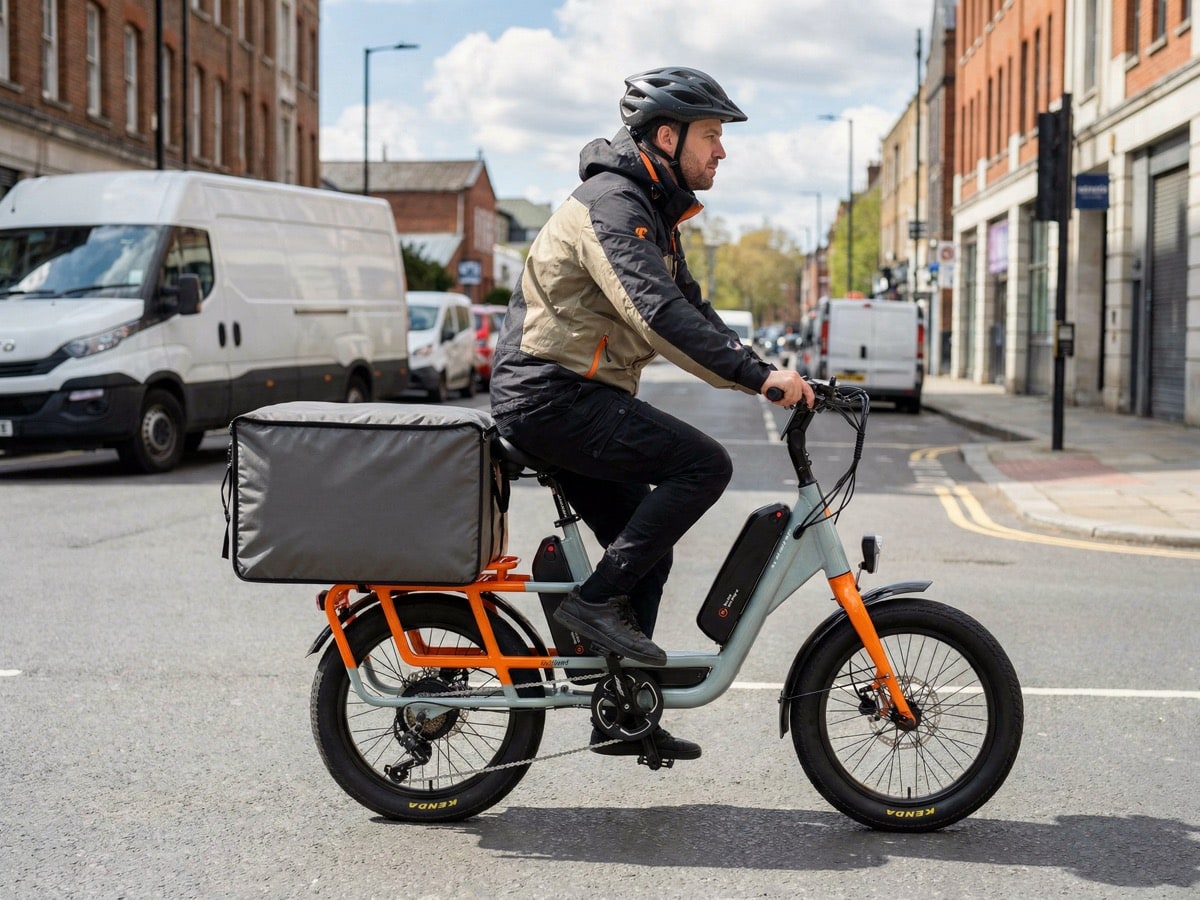
Cargo e-bikes aren't a novelty anymore. They're a logistics tool that's been quietly reshaping last-mile delivery across Europe, Asia-Pacific, and increasingly North America.
But here's what most articles miss: not all cargo bikes are the same, and operators choosing the wrong platform for their use case burn through capital faster than diesel vans.
We've spent the past three years working with logistics operators, postal services, and quick-commerce startups deploying cargo e-bikes at scale. Here's what actually works—and where different platforms fit.
1. Quick-Commerce and Grocery Delivery
The 15-minute delivery model has created massive demand for nimble, high-capacity vehicles that can navigate pedestrian zones, bike lanes, and congested streets faster than any van.
The Challenge
Quick-commerce operators need to move 20-40 kg payloads across 3-8 km routes, often completing 8-12 deliveries per shift. The vehicle must fit in narrow aisles between dark store shelving, handle frequent stop-and-go without overheating components, and keep groceries temperature-controlled.
What Works
- Long-tail cargo bikes with rear-mounted modular containers work best. They maintain a familiar riding position while offering 80-120 L of cargo volume.
- Insulated cargo boxes with phase-change cooling inserts keep chilled items under 5°C for up to 90 minutes without active refrigeration.
- Swappable battery systems are non-negotiable—riders can't afford 4-hour charging breaks during lunch rush.
We've deployed this configuration with quick-commerce operators in Barcelona, Singapore, and São Paulo. Average delivery time dropped 23% compared to their previous moped fleets, primarily because riders could use bike infrastructure that bypassed traffic.
2. Postal and Parcel Services
National postal services were early adopters of cargo e-bikes. Deutsche Post, PostNL, Royal Mail, and Australia Post all run significant cargo bike fleets—but their requirements differ substantially from commercial delivery.
The Challenge
Postal routes are dense: 150-300 stops per shift, with small packages and letters dominating the mix. The vehicle must support repeated mounting/dismounting, carry mixed loads of letters and parcels, and survive 5+ years of daily abuse.
What Works
- Front-loader (bakfiets-style) cargo bikes with open-top containers allow quick access without opening doors or lids. Postal workers can grab items while standing beside the bike.
- Heavy-duty kickstands with automatic engagement prevent tip-overs during loading.
- Internal dividers and elastic straps keep sorted mail organized through the route.
- Step-through frames reduce mounting effort across hundreds of stops.
PostNL's Amsterdam fleet runs TXED front-loaders with 250 L cargo volume. Their data shows each bike replaces 0.7 delivery vans when route density exceeds 40 stops per km².
"The math is simple: our cargo bikes cost 60% less per kilometer than electric vans, access streets vans can't enter, and our riders prefer them for short-hop routes." — Fleet Operations Manager, European Postal Service
3. Food Delivery Platforms
Uber Eats, DoorDash, Deliveroo, and regional equivalents are increasingly steering riders toward e-bikes—partly for sustainability optics, partly because two-wheelers are genuinely faster in urban cores.
The Challenge
Food delivery is time-critical (30-minute windows) with variable payload sizes. Riders are typically contractors using their own vehicles, so adoption depends on affordability and ease of use. Hot food must stay hot; cold drinks can't arrive warm.
What Works
- Rear-rack cargo bikes with standardized mounting points for insulated delivery bags. The bike itself is lighter than a full cargo platform, making it practical for riders who also use it for commuting.
- Heated cargo compartments (powered by the main battery) keep pizza boxes at 60°C+ during winter deliveries.
- Quick-release bag mounts let riders swap between platform-branded bags.
- Compact frames that fit in apartment elevators—gig workers can't leave expensive bikes on the street overnight.
For platform operators running captive fleets (like Getir or Gopuff), the equation shifts toward sturdier long-tail platforms with integrated thermal boxes. These cost more upfront but survive the 80-100 km daily mileage that shared fleet models demand.
4. Corporate Campus and Industrial Logistics
This is the use case most people overlook. Large corporate campuses, airports, hospital complexes, and manufacturing plants have internal logistics needs that cargo bikes handle better than golf carts or internal combustion vehicles.
The Challenge
Moving tools, supplies, documents, and small equipment across sprawling facilities. Routes may include indoor corridors, outdoor pathways, and loading docks. Vehicles must be quiet (hospital corridors), emission-free (food processing), and narrow enough for service elevators.
What Works
- Utility trikes with 200+ kg payload capacity for heavy-duty internal logistics.
- Compact two-wheel cargo bikes with front baskets for lighter loads requiring building access.
- Custom branding and safety features (lights, horns, speed limiters) to meet facility regulations.
- Fleet management integration with campus security systems for access control and tracking.
Munich Airport deployed a mixed fleet of cargo bikes and trikes for airside catering logistics. The vehicles move meals from central kitchens to gate positions faster than motorized carts while meeting strict emission rules in terminal zones.
5. Municipal Services and Waste Collection
City governments are piloting cargo bikes for services that traditionally required trucks: park maintenance, small-item waste collection, parking enforcement, and mobile city services.
The Challenge
Public sector deployments require durability (3-5 year asset life), serviceability by municipal mechanics, and compliance with government procurement standards. Payloads vary wildly—from enforcement officer equipment to gardening tools to collected litter.
What Works
- Modular cargo platforms with interchangeable rear units: flatbeds for equipment, enclosed boxes for waste, tool racks for maintenance crews.
- High ground clearance for park paths and unpaved surfaces.
- Heavy-duty components rated for continuous daily use rather than consumer-grade parts.
- Standardized parts across the fleet to simplify municipal workshop inventory.
The City of Ghent (Belgium) runs cargo bikes for inner-city waste collection, reducing noise complaints from early-morning truck operations by 100% in participating districts. Each bike collects approximately 400 kg of waste per shift from residential litter bins.
Choosing the Right Platform: A Quick Framework
After years of deployment data, we've developed a simple decision framework:
| Use Case | Recommended Platform | Key Requirement |
|---|---|---|
| Quick-commerce / Grocery | Long-tail cargo bike | Swappable batteries, thermal cargo |
| Postal / Parcel | Front-loader (bakfiets) | Easy access, high durability |
| Food Delivery (Gig) | Rear-rack e-bike | Lightweight, bag compatibility |
| Food Delivery (Fleet) | Long-tail with thermal box | High mileage, integrated heating |
| Campus / Industrial | Utility trike | Heavy payload, indoor access |
| Municipal Services | Modular cargo platform | Interchangeable cargo units |
The Economics Keep Getting Better
Beyond operational fit, the financial case for cargo e-bikes strengthens every year:
- Fuel costs: €0.01-0.02 per km (electricity) vs. €0.15-0.25 per km (diesel van)
- Maintenance: 40-60% lower than motorized vehicles—no oil changes, fewer brake replacements, simpler drivetrain
- Parking and access: Zero congestion charges, access to pedestrian zones and bike lanes, free or reduced parking
- Driver licensing: No commercial license required in most jurisdictions, expanding the labor pool
For operators still evaluating the switch, the question isn't whether cargo bikes work—it's which configuration matches your specific logistics profile.
We've helped operators across five continents spec the right platform for their use case. If you're planning a cargo bike deployment—or troubleshooting an existing fleet that isn't performing—get in touch. We'll share relevant case studies and help you avoid the spec mistakes that cost time and money.