Why Cargo E-Bikes Are the Next Big Trend in European Urban Mobility
 Share on X
 LinkedIn
 Facebook
 Reddit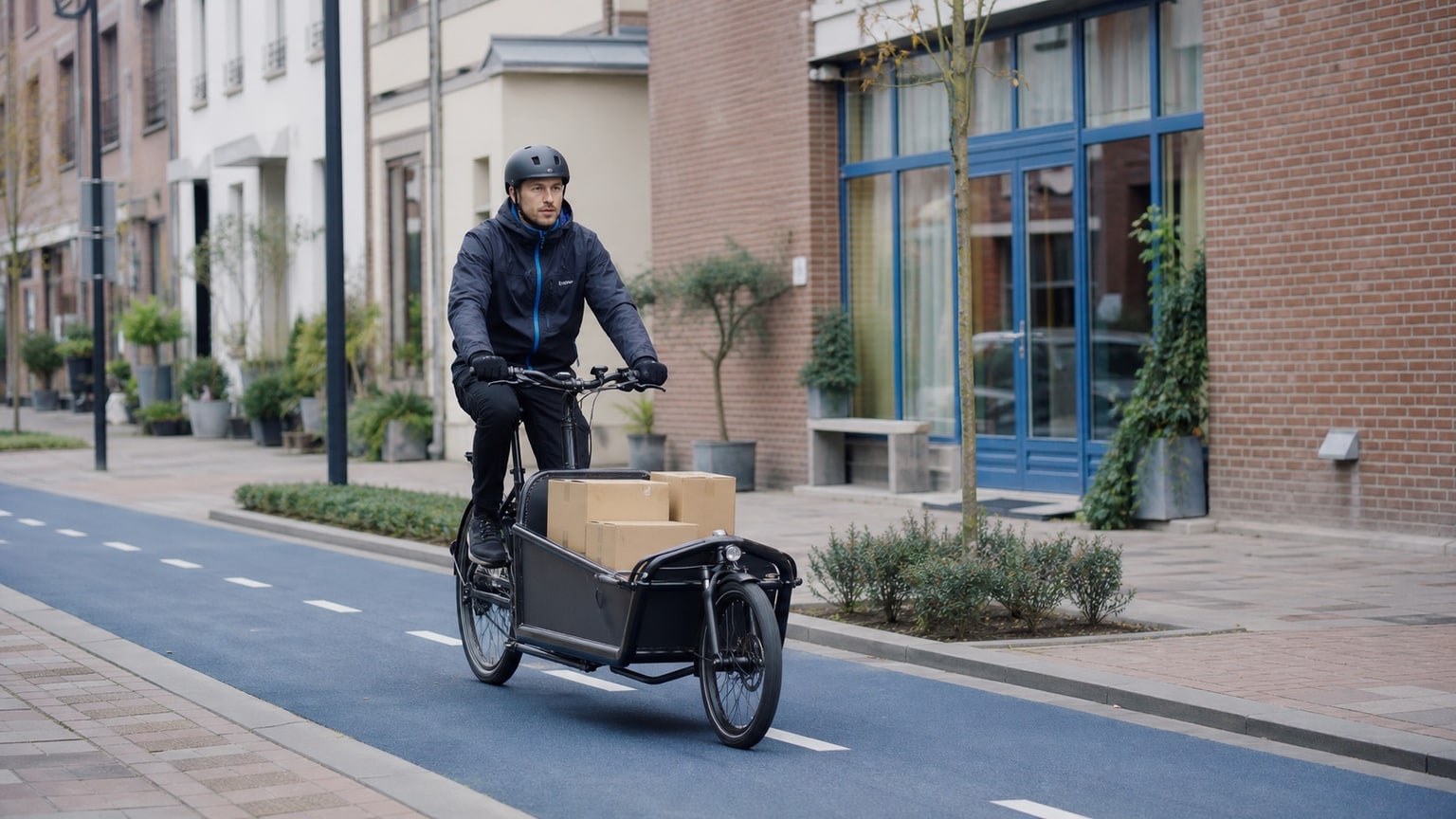
From Amsterdam's zero-emission freight zones to Amazon's 70+ European micro-hubs, cargo e-bikes are no longer a niche experiment—they are becoming core urban infrastructure. With the global cargo e-bike market projected to grow from $4.1 billion in 2025 to $8.97 billion by 2032, and Europe commanding over 40% of that value, the opportunity for manufacturers, brands, and importers has never been clearer.
This article breaks down the market data, regulatory tailwinds, infrastructure investments, and real-world case studies driving the shift—and what it means for B2B buyers entering the European market.
The Market in Numbers: A Segment Defying the Cycle Industry Slowdown
While the broader European bicycle market has faced headwinds—overall e-bike sales plateauing in several mature markets during 2024–2025—the cargo e-bike sub-segment tells a starkly different story. According to MarketsandMarkets, the global cargo e-bike market reached $4.10 billion in 2025 and is forecast to hit $8.97 billion by 2032, growing at a CAGR of 11.8%. Europe dominates this market, holding over 40.4% of global value in 2025, with Germany leading in both infrastructure and adoption.
The Mordor Intelligence Europe-specific report estimates the regional e-cargo bike market at $1.16 billion in 2025, growing to $1.21 billion in 2026 and reaching $1.46 billion by 2031 at a 3.85% CAGR. Meanwhile, Fact.MR projects the global electric cargo bike market will surge from $1.7 billion in 2025 to $12.4 billion by 2035 at a 22% CAGR—with two-wheeled models dominating at 42% market share and commercial applications accounting for 61.5% of demand.
On the ground, the numbers are equally compelling. Cycling Industries Europe (CIE) reported cargo bike sales among its surveyed members grew 2.7% in the 2022–2023 period, reaching approximately 115,000 units—even as the broader cycling industry contracted. In Belgium alone, the Belgian Cycle Logistics Federation (BCLF) Barometer 2025 revealed that 5.2 million parcels were delivered by cargo bike in 2024—a 70% increase from 3 million in 2023. The sector now employs 6,200 people and logged 10.7 million km of bicycle deliveries, up 30% year-over-year.
European Cargo E-Bike Market Projections (Selected Sources)
| Source | Scope | 2025 Value | Forecast & CAGR |
|---|---|---|---|
| MarketsandMarkets | Global | $4.10B | $8.97B by 2032 (11.8%) |
| Mordor Intelligence | Europe | $1.16B | $1.46B by 2031 (3.85%) |
| Fact.MR | Global | $1.7B | $12.4B by 2035 (22.0%) |
| IMARC Group | Global | — | $5.5B by 2034 (9.11%) |
Sources: MarketsandMarkets (Jun 2025), Mordor Intelligence (Jan 2026), Fact.MR (Nov 2025), IMARC Group (2025). Variance reflects differing market definitions (e-cargo only vs. all cargo bikes, OEM vs. retail pricing).
Zero-Emission Zones: The Policy Forcing Function
The single most powerful accelerant for cargo e-bike adoption in Europe is the rapid expansion of Zero-Emission Zones for Freight (ZEZ-F). These are not aspirational targets—they are enforceable regulations that ban polluting vans and trucks from city centers, creating an immediate operational need for zero-emission alternatives.
The Netherlands leads the way. Since January 1, 2025, 18 Dutch cities—including Amsterdam, Rotterdam, Utrecht, Eindhoven, and Groningen—have implemented zero-emission zones for freight under a unified national framework. The impact has been dramatic: according to Clean Cities research, 78% of new vans registered in the Netherlands in H1 2025 were battery-electric (vs. an EU average of just 9%), and electric truck sales rose 188% year-over-year. An additional 15 Dutch municipalities are planning similar zones.
The C40 network is scaling this model globally. The C40 Zero Emission Freight Programme reports that 35 cities worldwide have committed to phase in zero-emission freight zones, with the majority in Europe. Paris's ZFE-m (Zone à Faibles Émissions mobilité) is progressively banning older diesel vehicles, with a full combustion ban targeted for 2030. London's expanded ULEZ now covers all boroughs. Milan's Area B and Area C restrict access based on emission standards.
For logistics operators, the calculus is simple: comply or lose access to your delivery territory. Cargo e-bikes represent the lowest-cost compliance pathway—no commercial driving license required, no congestion charges, no parking fees, and full access to pedestrian zones and narrow streets that even electric vans cannot reach.
"78% of new vans registered in the Netherlands in H1 2025 were battery-electric—compared to an EU average of 9%. Zero-emission zones don't just encourage change; they mandate it." — Clean Cities Campaign / ZAG Daily, October 2025
Amazon, DHL, PostNL: How Major Logistics Players Are Betting on Cargo Bikes
The strongest validation of cargo e-bikes as a serious logistics tool comes from the companies with the most to lose from getting last-mile wrong. The scale of corporate investment in cargo bike fleets across Europe is now substantial and accelerating.
Amazon announced in June 2025 that it had completed 100 million deliveries in Europe using electric cargo bikes, e-mopeds, and on-foot methods. The company now operates more than 70 micromobility hubs in over 50 European cities, with cargo bike deliveries active in 12 German cities alone. In 2026, Amazon plans to open 25 additional micromobility hubs across Europe—including a third hub in Berlin. In May 2026, Amazon also launched a pilot program in Washington D.C. with 15 four-wheeled e-cargo bikes, studying whether shifting last-mile deliveries from vans to smaller electric cargo vehicles can improve efficiency in dense neighborhoods.
DHL has been a cargo bike pioneer, operating thousands of cargo bikes globally with the majority deployed in European cities. The company's Rotterdam operations showcase a fully carbon-neutral delivery model combining micro-hubs with cargo bike fleets. DHL's sustainable fleet strategy now integrates cargo bikes as a core component alongside electric vans and trucks.
PostNL, the Netherlands' national postal service, reported in July 2025 that it is delivering emission-free in 27 Dutch city centers—nearly double the 14 cities where zero-emission zones are legally mandated. This proactive over-compliance signals that operators see zero-emission delivery not as a regulatory burden but as a competitive advantage.
In Belgium, the merger of Cargo Velo and De Fietskoerier in 2026 created the country's largest cycle logistics operator, with the combined entity estimating a potential market of 7 million packages annually—up from the 5.2 million already delivered by bike in 2024.
Infrastructure Investment: From Cycle Lanes to Micro-Hubs
One of the historical barriers to cargo bike adoption—lack of suitable infrastructure—is being systematically dismantled through unprecedented public and private investment.
Paris: the €250 million transformation. Paris has committed a €250 million budget to its 2021–2026 cycling plan (Plan Vélo), up from €150 million in 2015. The goal: making Paris "100% cyclable." By April 2026, segregated bike lanes line Boulevard Voltaire and dozens of other major thoroughfares. Smart traffic signals extend green lights for cyclists during peak hours. Cycling trips in Paris have more than tripled since 2019. The city also offers direct financial assistance for cargo bike purchases through its Mobilib' program, updated in October 2024.
Bloomberg's $350 million global commitment. In April 2026, Bloomberg Philanthropies announced a $350 million investment in global road safety and cycling infrastructure across 13 countries and more than 30 cities—including the Bloomberg Initiative for Cycling Infrastructure. This represents one of the largest private commitments to cycling infrastructure ever made.
Micro-consolidation hubs are proliferating. The hub-and-spoke model—where parcels transfer from trucks to cargo bikes at urban micro-hubs—is now standard practice in major European cities. Amazon alone operates 70+ such hubs across 50+ cities. Paris uses Sogaris logistics platforms; Berlin has the KoMoDo shared micro-hub model; Barcelona, Milan, and Stockholm are all converging on hub-based urban delivery. The EU-funded DECARBOMILE Horizon Europe project launched its first micro-hub and municipal cargo bike service in Logroño, Spain in June 2025. Bologna is piloting a similar model through the Physical Internet framework.
Wider cycle lanes designed for cargo. Berlin's Radschnellwege (cycle highways) are built to 3-meter widths specifically to accommodate cargo bike traffic. The Netherlands' existing cycling infrastructure—already the world's densest—is being upgraded with cargo-specific features: reinforced surfaces, wider turning radii, and dedicated cargo bike parking with charging points.
Subsidies and Incentives: Governments Paying You to Switch
European governments are not merely permitting cargo e-bikes—they are actively subsidizing their purchase. The incentive landscape in 2025–2026 is extensive and growing:
- The Netherlands: The Environmental Investment Allowance (MIA) allows businesses to deduct up to 45% of cargo e-bike investment costs from taxable profits—nearly halving net acquisition cost for commercial buyers.
- France: While the national "bonus vélo" program for individuals was discontinued in February 2025, Île-de-France Mobilités still pays 50% of purchase price (up to €600 for an electric cargo bike), and municipal top-ups in Paris, Lyon, and Grenoble can push combined support to €1,200–€2,000. The employer-side Forfait Mobilités Durables (up to €700/year tax-exempt) is the main lever for delivery companies.
- Germany: Federal and state-level programs support cargo bike purchases. The federal BAFA program typically reimburses around 25% of purchase cost (capped around €2,000–€2,500), but funding rounds open and exhaust within weeks — monitor BAFA announcements and file within days. Cities like Munich, Stuttgart, Hamburg, and Leipzig run their own Lastenrad programs (often €400–€1,000 per bike) that can stack on federal money. See our September 2026 European subsidies guide for the current country-by-country picture.
- EU-level programs: The European Green Deal, the Innovation Fund, and the LIFE program all offer substantial financial support for electric cargo bike purchases as part of sustainable business mobility initiatives.
The net effect: purchase subsidies reduce end-user acquisition cost by 20–40%, compressing payback periods and making fleet conversion business cases significantly easier to approve at the CFO level.
Two Demand Pillars: Commercial Logistics and Family Mobility
The cargo e-bike market is powered by two distinct but equally robust demand segments, each with different product requirements and growth dynamics.
Pillar 1: Last-mile delivery and commercial fleets. This is the larger segment by revenue (61.5% of the market according to Fact.MR) and the one most directly driven by regulatory pressure. The economics are compelling: a single cargo e-bike can deliver 100–180 parcels per day when supported by restocking from a nearby micro-hub. Operating costs are a fraction of electric vans—no insurance premiums in the thousands, no commercial parking fees, no congestion charges. A cargo e-bike costs €4,000–8,000 versus €35,000+ for an electric van, requires no commercial driving license, and can access pedestrian zones and narrow medieval streets that no van can reach.
The EU's Urban Mobility Observatory notes that cargo bikes can carry loads up to 300 kg and 2 m³—sufficient for the vast majority of last-mile parcel deliveries. Research from Reggio Emilia demonstrates that this capacity addresses the fundamental inefficiency of light commercial vehicles, which typically operate at only 20–30% of their load capacity in urban environments.
Pillar 2: Family transport and car replacement. Starting from Denmark and the Netherlands, cargo bikes designed for child transport have spread across Europe since the early 2000s. Germany is now the fastest-growing family cargo bike market. According to Statista's 2024 bike study (linexo/Wertgarantie), the most common use case for cargo bike owners in Germany is transporting shopping and groceries, followed by child transport. Among electric cargo bikes, long-tail models (with cargo behind the rider) are the most popular configuration for family use.
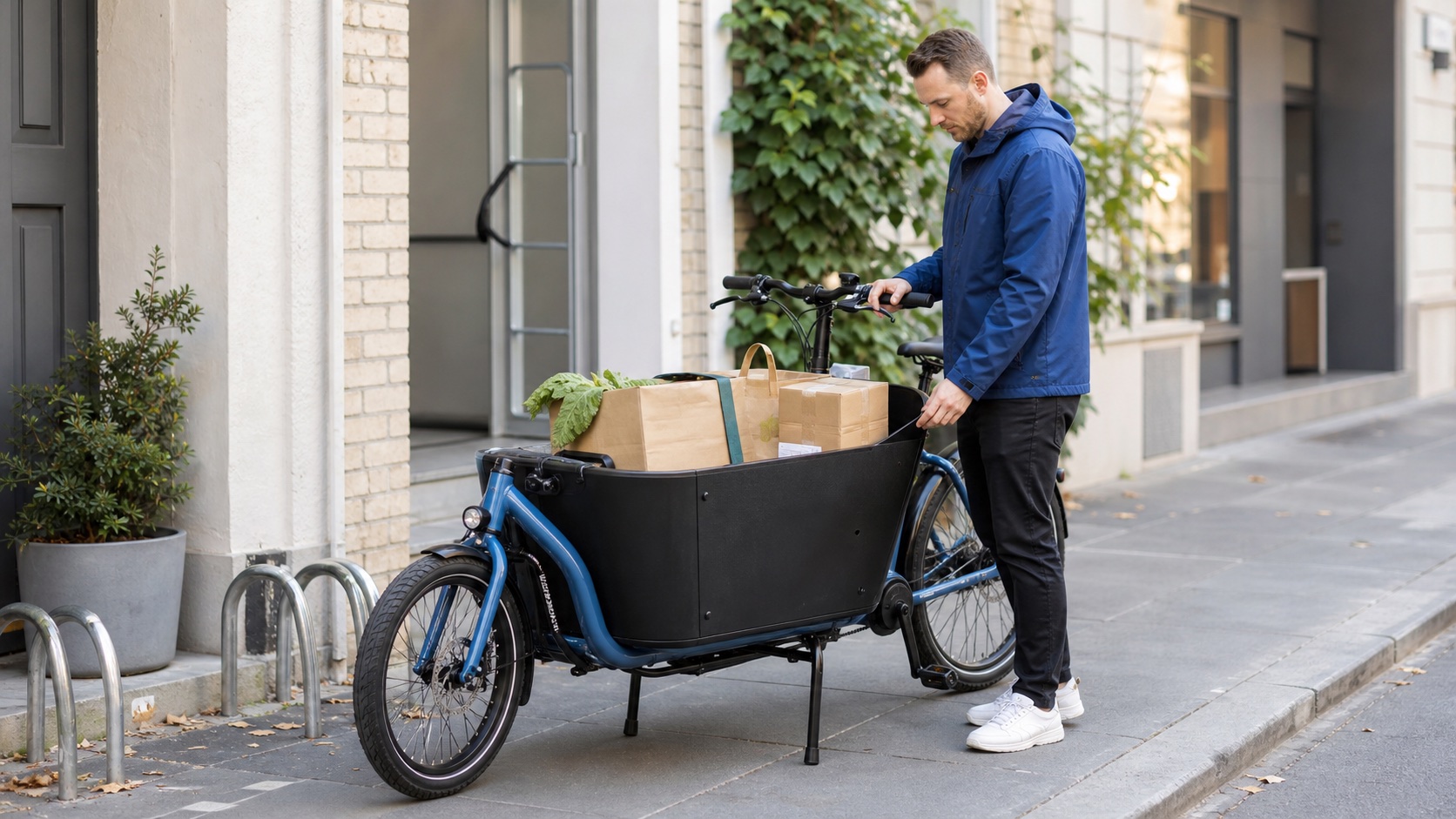
For urban families, a cargo e-bike replaces the second car—handling school runs, grocery trips, and weekend outings at a fraction of the cost and parking hassle. This segment demands different frame geometries (lower step-through, child seating, rain covers), safety features (disc brakes, stability systems), and accessories than commercial models, creating significant product diversification opportunities for manufacturers.
Cargo E-Bike vs. Electric Van: Annual Operating Cost Comparison
| Cost Category | Cargo E-Bike | Electric Van |
|---|---|---|
| Vehicle acquisition (amortized/yr) | €1,200–2,000 | €7,000–9,000 |
| Energy / charging | €50–120 | €1,800–2,500 |
| Insurance | €150–300 | €2,000–3,500 |
| Maintenance & repairs | €200–400 | €1,500–2,500 |
| Congestion / parking / LEZ fees | €0 | €3,000–6,000 |
| Driver licensing requirement | None (EU pedelec) | Category B minimum |
| Total annual cost (est.) | €1,600–2,820 | €15,300–23,500 |
Indicative for Western European markets. Actual costs vary by city, fleet size, and operational model. Cargo e-bike figures assume a €5,000–8,000 purchase price amortized over 4 years.
Product Segmentation: What the Market Demands
The cargo e-bike market is segmenting rapidly. Brands that understand these distinct product categories—and can serve multiple segments from a shared platform—will capture disproportionate market share.
- Two-wheel longtails: The dominant form factor for family use. Long-tail bikes place cargo (or child seats) behind the rider, offering a more natural riding feel and narrower profile than box bikes. Most popular electric cargo bike type in Germany. Typical payload: 60–80 kg rear + rider.
- Two-wheel long johns (bakfiets): The classic Dutch/Danish design with a cargo platform between the handlebars and front wheel. Preferred for child transport in the Netherlands and Denmark due to the low, enclosed cargo box. Typical payload: 100–150 kg.
- Three-wheel box bikes: The workhorse of commercial fleets. Larger cargo volume (up to 2 m³), higher payload (200–300 kg), and greater stability when loaded. Used by DHL, Amazon, UPS, and courier services. Trade-off: wider turning radius, heavier weight, higher price point.
- Compact mid-tails: A growing category for urban couriers and food delivery—shorter than full longtails, more maneuverable in traffic, but still offering meaningful cargo capacity (40–60 kg). Popular with gig-economy riders and small business owners.
- Heavy-duty four-wheel platforms: The newest category, exemplified by Amazon's 2026 D.C. pilot—enclosed, four-wheeled e-cargo vehicles with secure cargo holds, covered seating, and windshield wipers. Primarily deployed by large logistics operators at the high end of the market.
Case Study: Belgium's Cycle Logistics Explosion
Belgium offers a compelling case study of how quickly cargo bike logistics can scale when conditions align. The BCLF Barometer 2025 provides hard numbers:
The context makes these numbers even more striking: 76% of Belgians purchased goods online in 2024 (above the EU average of 72%), and Brussels ranks among Europe's three most congested cities, with motorists spending 118 hours per year stuck in traffic. Cycle logistics is not just an environmental choice—it is faster and more reliable than van delivery in congested urban cores.
The Belgian Cycle Logistics Federation estimates that cargo bikes have the potential to replace up to one-third of motorized freight and service traffic in urban areas. With the May 2026 merger of Cargo Velo and De Fietskoerier creating a national market leader, the sector is consolidating and professionalizing—a clear signal of market maturity.
What This Means for Brands, Manufacturers, and Importers
For B2B buyers evaluating the European cargo e-bike opportunity, several strategic imperatives emerge from the data:
- The compliance window is narrowing. With 18 Dutch cities already enforcing ZEZ-F and 35+ cities committed to similar zones, demand for compliant last-mile vehicles is contractual, not speculative. Brands that cannot deliver EN 15194-certified, fleet-ready cargo e-bikes within 2026–2027 will miss the first wave.
- Platform thinking beats single-model thinking. The market rewards manufacturers who build modular platforms—shared drivetrains, battery systems, and control electronics across family, courier, and heavy-duty variants. This reduces tooling costs and accelerates time-to-market.
- Payload and range are table stakes. Commercial buyers expect 150–200 kg payload capacity and 60+ km real-world range as minimum specifications. Battery capacity of 500–750 Wh (or dual-battery options) is becoming standard for commercial-grade models.
- Certification is non-negotiable. EN 15194 (EPAC) certification is mandatory for EU market access. EN 17404 (cargo-bike-specific safety standard) is gaining traction as a procurement requirement among fleet operators and leasing companies.
- After-sales infrastructure wins deals. Fleet operators prioritize uptime above all else. Brands that can guarantee spare parts within 48 hours, local service networks, and fast warranty turnaround will consistently win over pure price competitors.
- Leasing and subscription models are the growth channel. Many fleet operators prefer OPEX over CAPEX. Brands that partner with leasing companies to offer cargo bike-as-a-service models will access a larger addressable market than those selling units outright.
European cargo e-bike demand is outpacing supply from established brands. New entrants with competitive pricing, EN-compliant products, and reliable European logistics can capture significant market share before the segment consolidates around 3–5 dominant players per category.
Government purchase incentives (Netherlands MIA 45% deduction, German €1,500/unit, EU Green Deal programs) effectively reduce end-user acquisition cost by 20–40%, compressing payback periods to under 12 months for commercial operators replacing van routes.
Zero-emission freight zones are not optional—they are enforceable bans. With 18 Dutch cities already live and 35+ European cities committed, logistics operators must procure zero-emission last-mile vehicles. Cargo e-bikes are the lowest-cost, fastest-to-deploy option.
The highest-value customers are fleet operators buying 50–500 units at a time. Winning their business requires fleet management software integration, standardized maintenance protocols, spare parts guarantees, and financing partnerships—not just a good bike.
The Road Ahead: What to Watch in 2026–2028
Several developments will shape the cargo e-bike landscape over the next 24 months:
- Expansion of ZEZ-F beyond the Netherlands. The Dutch model is being studied and replicated across Europe. Expect 10–15 additional major European cities to announce or implement zero-emission freight zones by 2028, with Germany, Belgium, and Scandinavia as the next wave.
- Consolidation of cycle logistics operators. The Belgium merger (Cargo Velo + De Fietskoerier) is a harbinger. As the sector professionalizes, expect further M&A activity as operators seek scale, geographic coverage, and fleet standardization—driving larger, more standardized procurement contracts.
- Battery technology improvements. Battery cost per kWh is now below €100/kWh at cell level. Higher energy density cells will enable longer range without weight penalties, making cargo e-bikes viable for longer delivery routes and reducing the density of micro-hub networks required.
- EN 17404 becoming a de facto requirement. While not yet legally mandatory in all markets, the cargo-bike-specific safety standard is increasingly appearing in fleet procurement specs. Brands that achieve EN 17404 certification proactively will have a competitive advantage in B2B sales channels.
- Integration with smart city systems. Cargo e-bikes are being integrated into broader urban logistics platforms—dynamic routing, real-time fleet tracking, predictive maintenance, and integration with city traffic management systems. Manufacturers that build IoT-ready platforms (CAN bus, GPS/cellular modules, open APIs) will be preferred by sophisticated fleet operators.
Bottom Line
Cargo e-bikes have moved from niche experiment to core European urban infrastructure in less than five years. Zero-emission zones, massive infrastructure investment, government subsidies, and proven commercial economics have created a self-reinforcing growth cycle that will accelerate through 2028 and beyond.
For brands, manufacturers, and importers, the strategic implication is clear: the next 24 months represent a narrow window to establish a credible European presence before market consolidation locks in the dominant players. Those who move now with compliant products, fleet-grade reliability, and strong after-sales infrastructure will define the next decade of European cargo logistics.
At TXED, we work with B2B partners to develop cargo e-bike platforms tailored to European market requirements—from EN-certified hardware to fleet integration support. If you are evaluating the cargo e-bike opportunity, explore our commercial delivery platforms or contact our team to discuss OEM and manufacturing options.